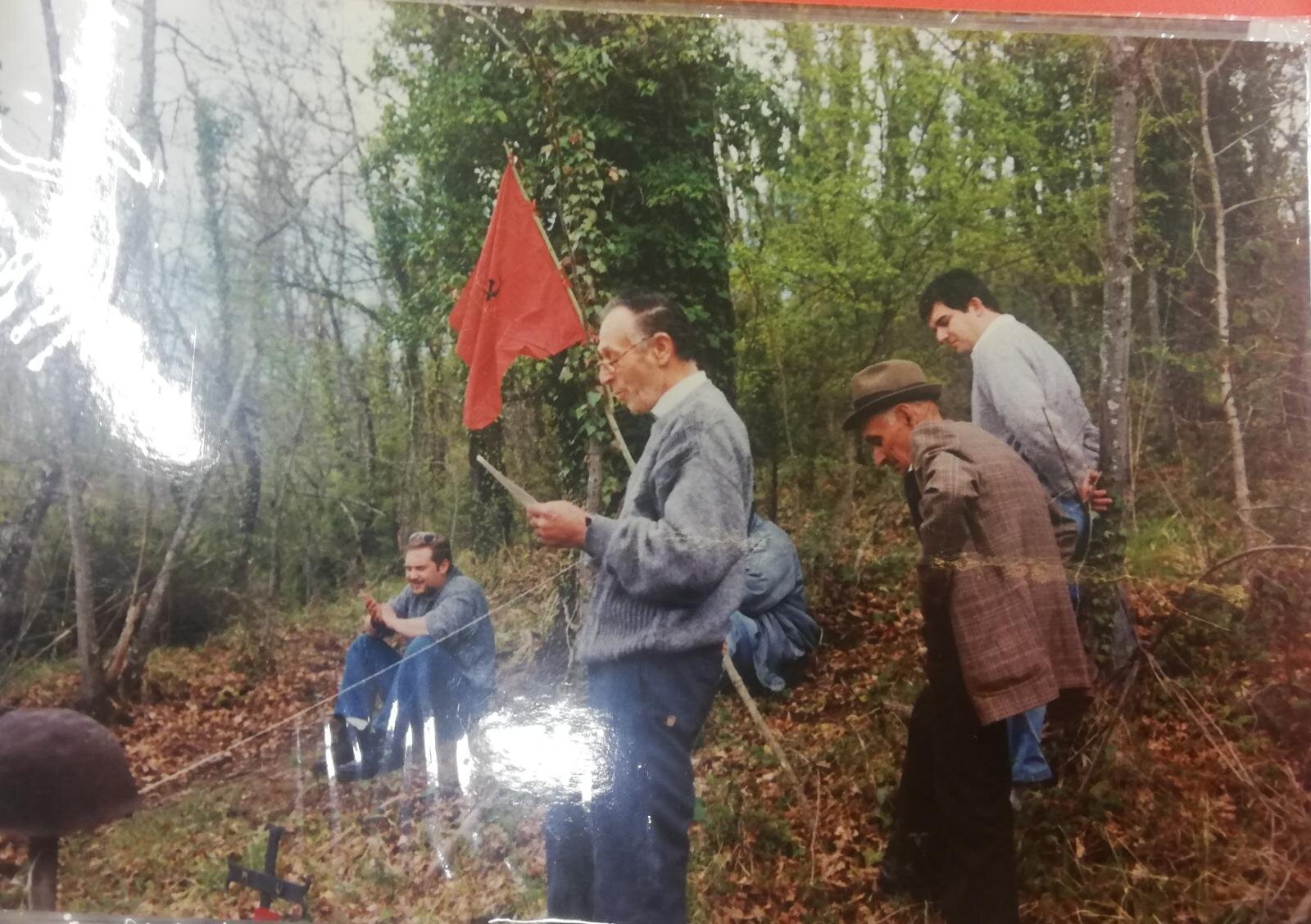
We like to remember above “the Duke”, Evaldo Serpi, as he pays tribute to the partisans on May 1st.
It is an intimate and powerful gesture, which exalts memory within memory. At a time when revisionist drifts tend to suggest that, all in all, fascists and partisans were the same, flattening History behind the easy rhetoric of “atrocities on both sides”, nurturing remembrance becomes a fundamental civic duty in what today, fortunately, is a Republic. Memory is the only antidote that keeps us from forgetting an inescapable fact: never did Italy sink so far into the oblivion of civilization and into shame as during the twenty years of fascism: a slide that culminated in abominations such as the suppression of democracy and political murder, the racial laws and complicity in the Holocaust, the exaltation of the most vulgar nationalism, colonial crimes and the rhetoric of permanent war as the resolution of international disputes. Remembering is not a mere nostalgic exercise, but the active defense of our democratic roots.
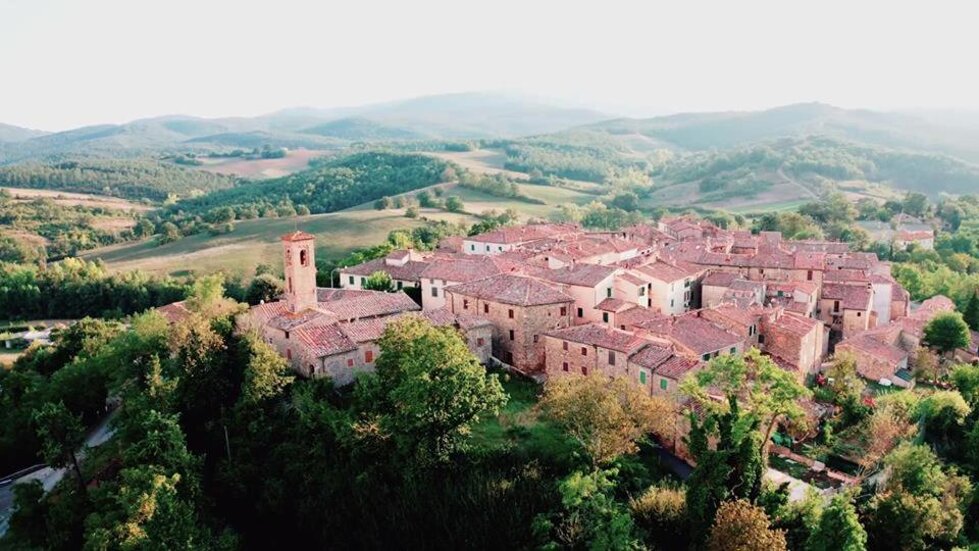
Those of Montalcinello, in this sense, are not simple geographic spaces, but true places where the Resistance continues to breathe through remembrance. In January 1944 the local National Liberation Committee was formed there, driven by the courage of Dario Galgani, Guido Senesi, Celestino Squarci, Spartaco Squarci, Alberto Bertini, Geraldo Bertini, Giocondo Ferri and Vittorio Fiorentini. Their secret meetings were held in a building on the street that today bears the name of Giacomo Matteotti. That house, having been a former inn, offered the perfect hideout: a maze of communicating rooms, with a deep cellar, stables and strategic escape routes through the side alleys.
This village was the scene of crucial and painful episodes, seared into the collective memory. On 24 June 1944, during an attack on a German motor column near the town, five young partisans lost their lives. Among them was Ugo Mancini, barely twenty. His body was taken to Montalcinello on a truck and hanged from an acacia tree behind the old elementary school: a macabre display wanted by the soldiers of the Reich as a warning and an instrument of terror to deter the population from supporting the struggle. Yet that terror has not erased the memory. To honor their sacrifice and prevent oblivion from erasing their names, the town has dedicated four streets and a small square to these boys, who fell at just over twenty for our freedom.
Let us not forget the sacrifice and the broken youth of Leonardo Dell'Aiuto (19 years old), Ugo Mancini (20), Guido Salvadori (23), Vincenzo Pulella (24) and the Soviet partisan Ivan Costantinovic, who fell in Montalcinello for our freedom.
Below are the names of the men of Montalcinello who chose to be partisans; speaking them today means recognizing in them the guardians of our Republic:
Bertini Raffaello
Bertini Delio
Bertini Lido
Boschetti Alfredo
Bruchi Leonardo
Chimenti Irio
Ferri Sergio
Fiorentini Elio
Galgani Lido
Galgani Vasco
Lenzi Bernardo
Serpi Fosco
Sforazzini Vitaliano
Verdiani Altero
(main source: Evaldo Serpi, Life, Work, traditions of the past, Tipografia Senese, 2010)