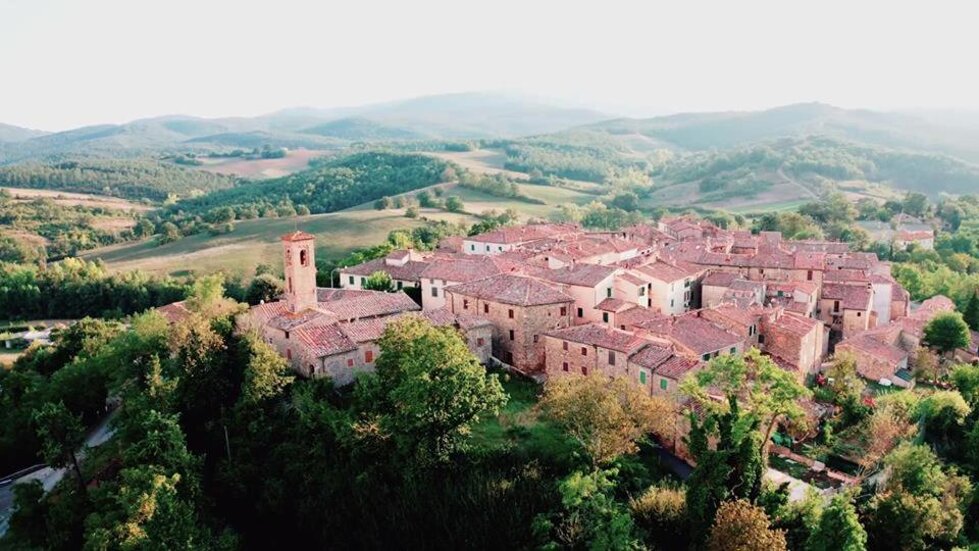
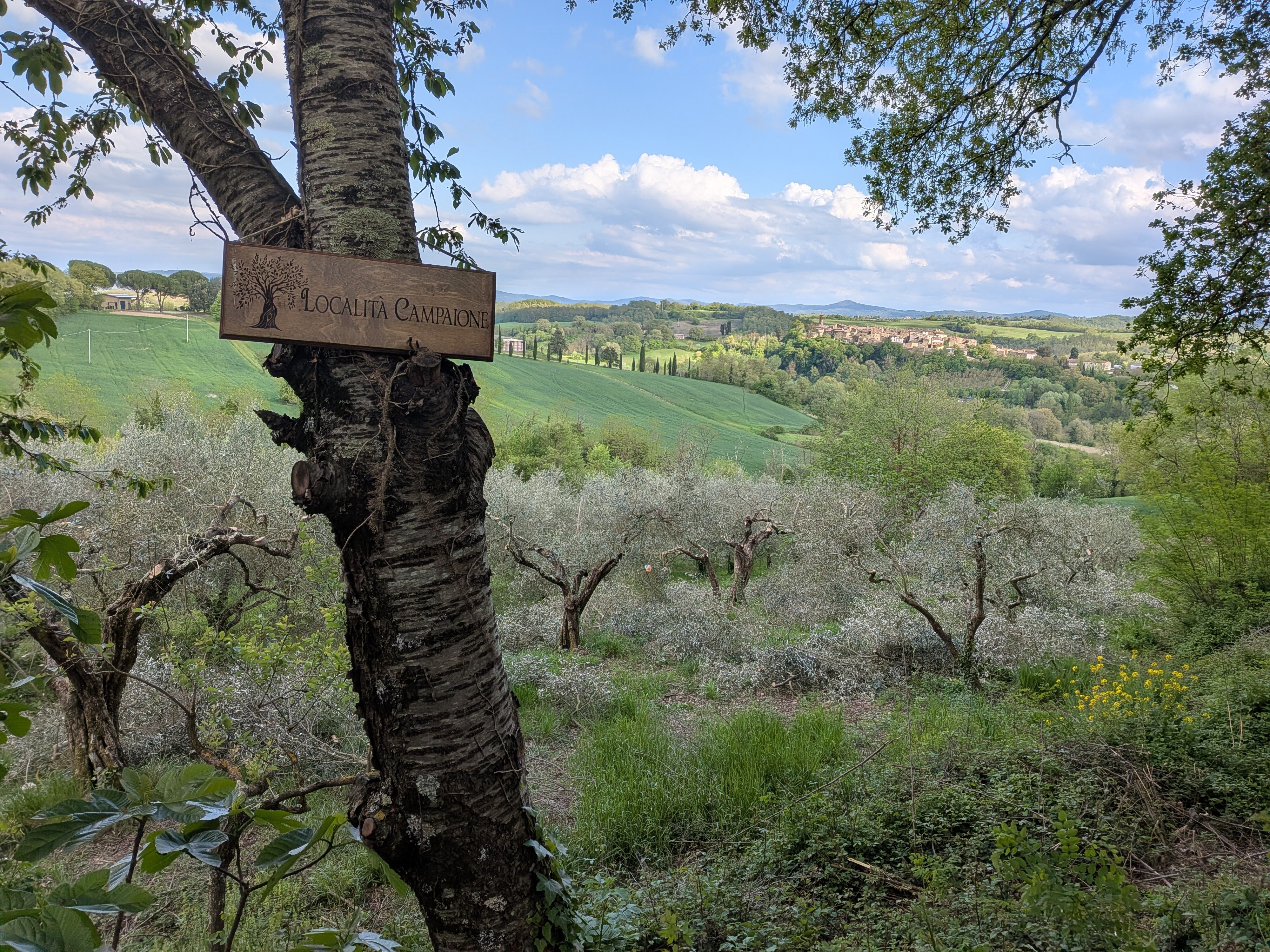
I didn’t even know the word “potino” existed, the old craftsman of a trade now fading away. Yet, when I met him this morning among the olive trees at Campaione, his gaze turned toward Montalcinello, I didn’t see a mere farmhand: I saw Laertes, tending the olives of his Ithaca for a whole lifetime. From his scarred hands and his silences I relearned a truth as ancient as it is uncomfortable: the earth’s recipe always demands the toll of sacrifice.
With the ruthless wisdom of one who can read the breath of plants, he proposed a “reform pruning.” The pact was clear: give up this year’s harvest entirely to restore the tree’s structure and its strength in the long run. It’s the eternal, wearing dilemma: better the egg today or the hen tomorrow? We, children of hurried pours of concrete, are trained to demand the egg at once, squeezing the present until it’s spent. The potino, instead, chooses the hen. He chooses to bet on a tomorrow that requires time, patience, and deprivation.
For a while the locals had warned me those crowns had run too high, but knowing it is different from finding the courage to fix it, and for this sometimes you must find the courage to entrust yourself to a barber or a surgeon, whichever he may be: the potino.
When, as evening fell, I went back to see them, the first impact I captured was brutal. For minutes I wandered among amputated branches and bare trunks, feeling like a survivor in a landscape overturned by a war front. But then, in the silence of that apparent emptiness, I understood. The potino had the audacity of “creative destruction,” that courage to take away that I lacked.
Often we cling tight to our dead branches, tolerating what is harmful just to avoid the trauma of the cut. We are like those who keep patching the cracks of a collapsing warehouse, now useful only as a backdrop for sterile campaign promises. The courage to demolish is missing, because destroying that wreck would force us to face the anguish of having to invent a different future for Montalcinello.
That man reminded me that cutting doesn’t mean killing, but making room. Knowing how to give up today’s egg, enduring the sight of branches on the ground, is the only way to guarantee the hen’s life tomorrow. A harsh lesson, but a necessary one.