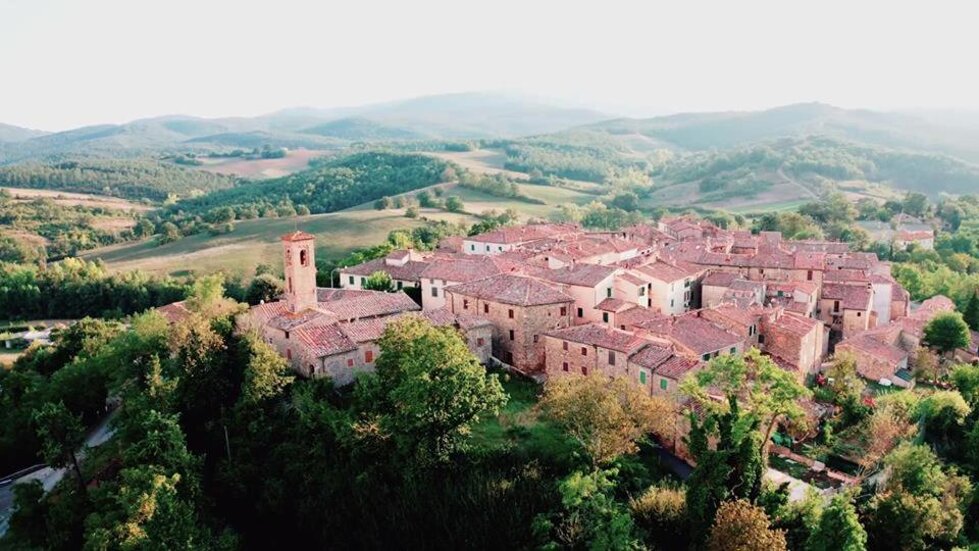
This is a hard post without images. Not so much because it’s a complaint, but because it asks us to look at reality with no discounts, avoiding both self-pity and oversimplifications.
In Montalcinello there are several clear critical issues: some small but symbolic, others more structural. Essential services and concrete actions are missing (apart from district heating, which, if you’ll allow me, is not a favor but compensation long owed for plants we feel we can almost touch): water in the fountains isn’t always there; a scenic alley has been closed for years with barriers, with no final solution; there is no adequate parking nor infrastructure for electric mobility. Simple requests, like installing speed bumps, go unanswered.
Meanwhile, they limit themselves to coloring the asphalt and mowing down the little plants the community puts in. All this after decades in which waste was dumped into a unique oasis and ecosystem.
At the same time, it is fair to acknowledge that a municipality like Chiusdino must spread limited resources across several hamlets, while nearby Radicondoli, whose borders reach as far as Montalcinello, has greater resources and only has Belforte.
Even the most authoritative historical dictionary of Tuscany, Emanuele Repetti’s, clearly attests to Montalcinello’s ancient roots in the area toward Radicondoli and Volterra. For centuries the village belonged to the diocese and the Volterran contado, under the rule of the bishops of Volterra, before passing under the control of the Republic of Siena in the 14th century. So this is not an invention or a modern rereading of history: it is a documented historical fact, reported by one of the most important reference works on Tuscany’s geography and history.
That said, one fact remains: today Montalcinello seems scarcely at the center of a development vision. Visible investment in public space is lacking (green areas, benches, paths), cultural enhancement of its thousand-year history is lacking, and so is planning that looks to the future (tourism, services, community life). Even the issue of the treatment plant or the trail network is not secondary, but part of a broader picture.
In comparing with other places it’s easy to fall into simplistic narratives (“there yes, here no”), but it is legitimate to ask whether Montalcinello is really playing its game. I think it is right to reflect on whether the current territorial setup is adequate or whether it risks amounting to a death sentence for the village.
The most delicate point concerns the demographic and social future. Today young people move elsewhere for sports (Chiusdino has equipped itself with modern, well-appointed soccer fields, while in Montalcinello you’d still be playing on concrete), for services, and for everyday life. It’s normal that they then build their habits there and, over time, their lives too. This is a real process that risks gradually emptying the village: a silent hemorrhage.
From here comes a question, not a provocation: if an area cannot find, within its own municipality, the conditions to relaunch itself, does it make sense at least to discuss, without taboos, other possibilities? For example, a different administrative placement.
It is neither a simple nor an automatic solution. It would require:
- an initiative by citizens;
- the involvement and opinion of the municipalities concerned;
- a local referendum;
- and, finally, a decision by the Region.
So it is not a slogan, but a long and complex path. However, ignoring the issue on principle risks being more harmful than addressing it seriously.
The goal is not to create opposition, but to prevent Montalcinello from falling behind. Because, beyond administrative borders, the real question is only one: is there a concrete vision for its future?
Whoever is writing here could even launch a poll and would already know the answer. But that is precisely the point: it’s time to be mature and to speak frankly with each other, without propaganda. Loving Montalcinello unconditionally means giving it every opportunity it deserves, without creating opposition. At times it seems that, for Chiusdino, Montalcinello represents more a problem than added value; but, precisely for this reason, a solution that can satisfy everyone exists, and it should not be a taboo to talk about it.
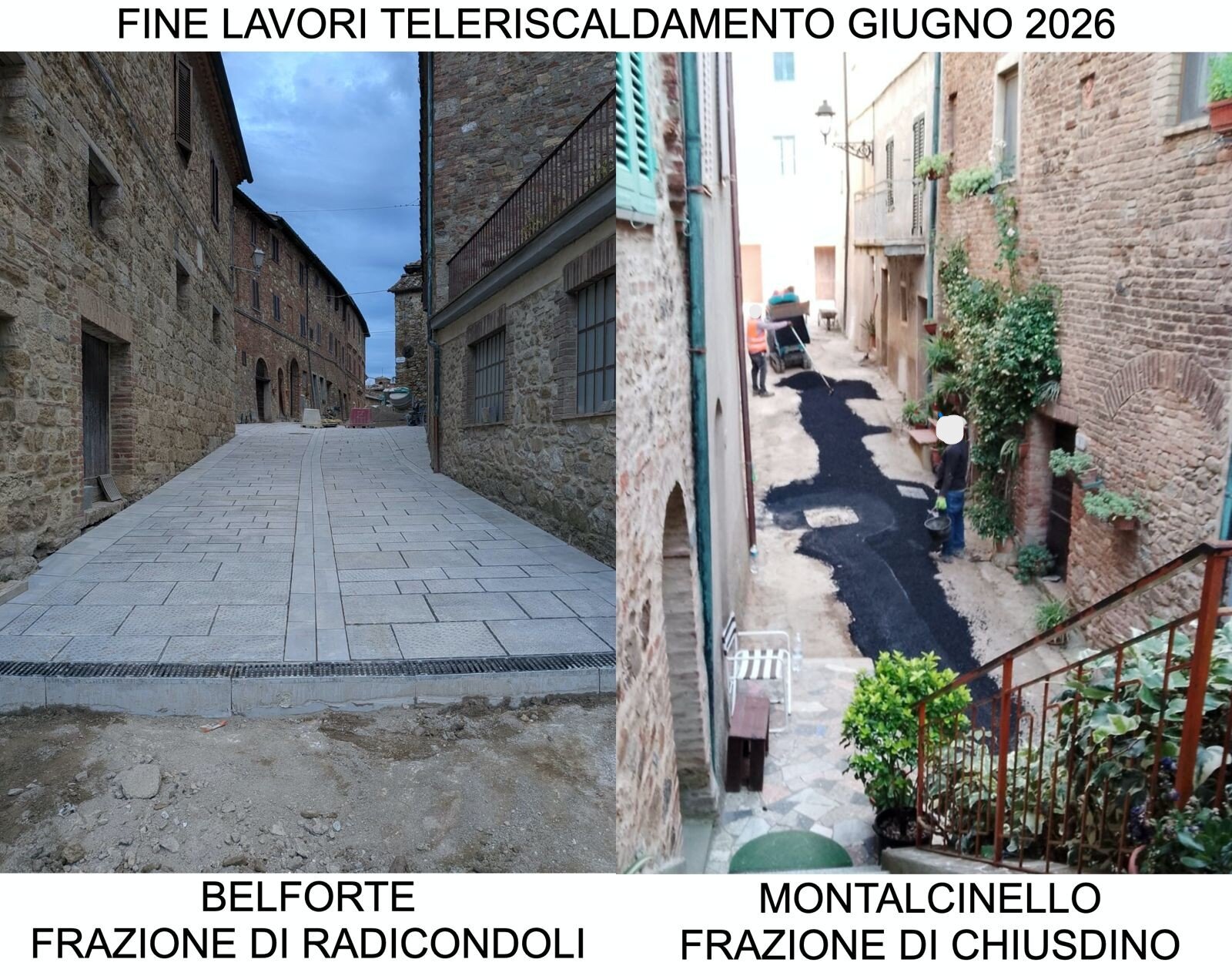
.jpeg "Fewer words, more action! ⛏️🌿")