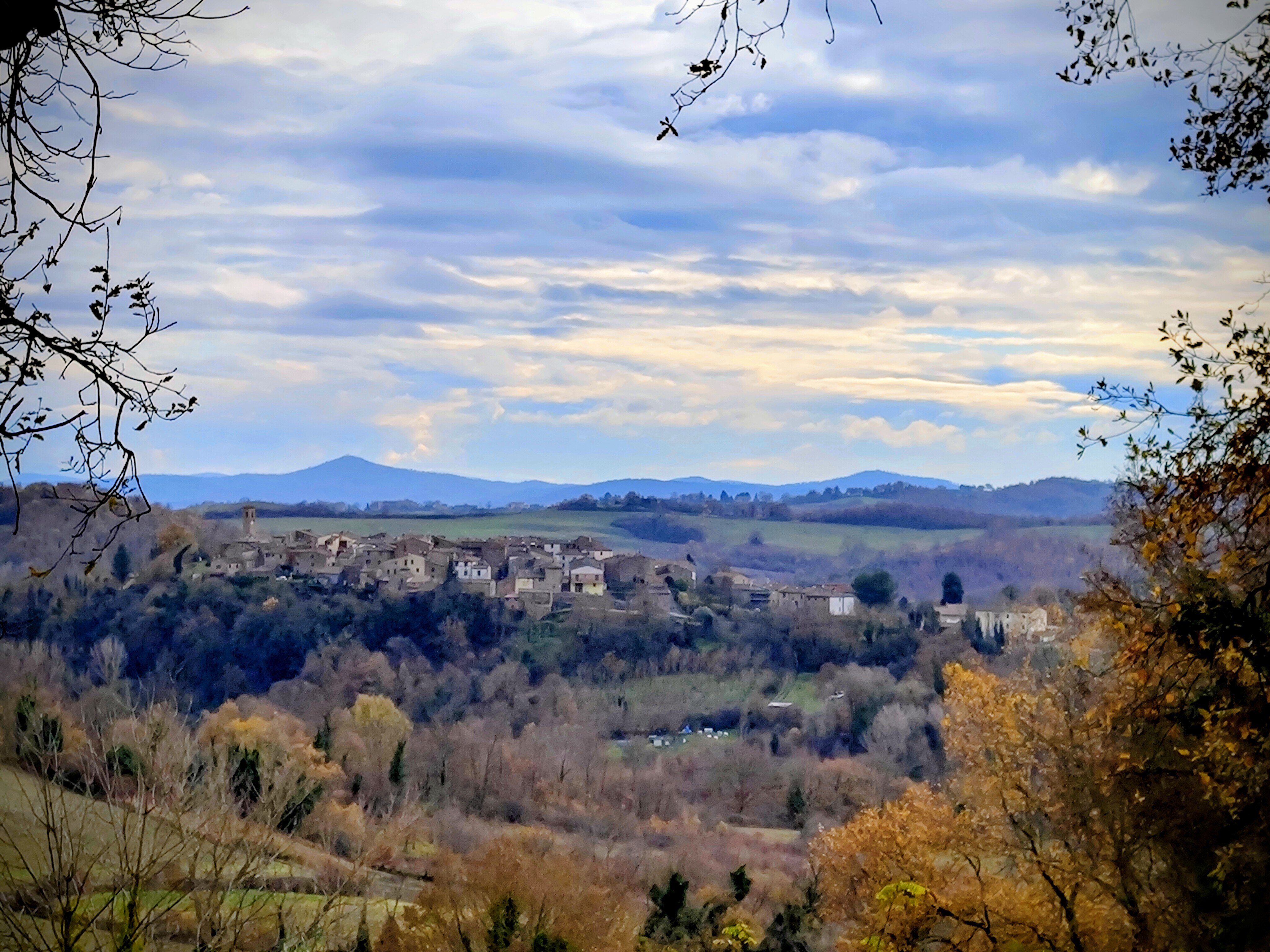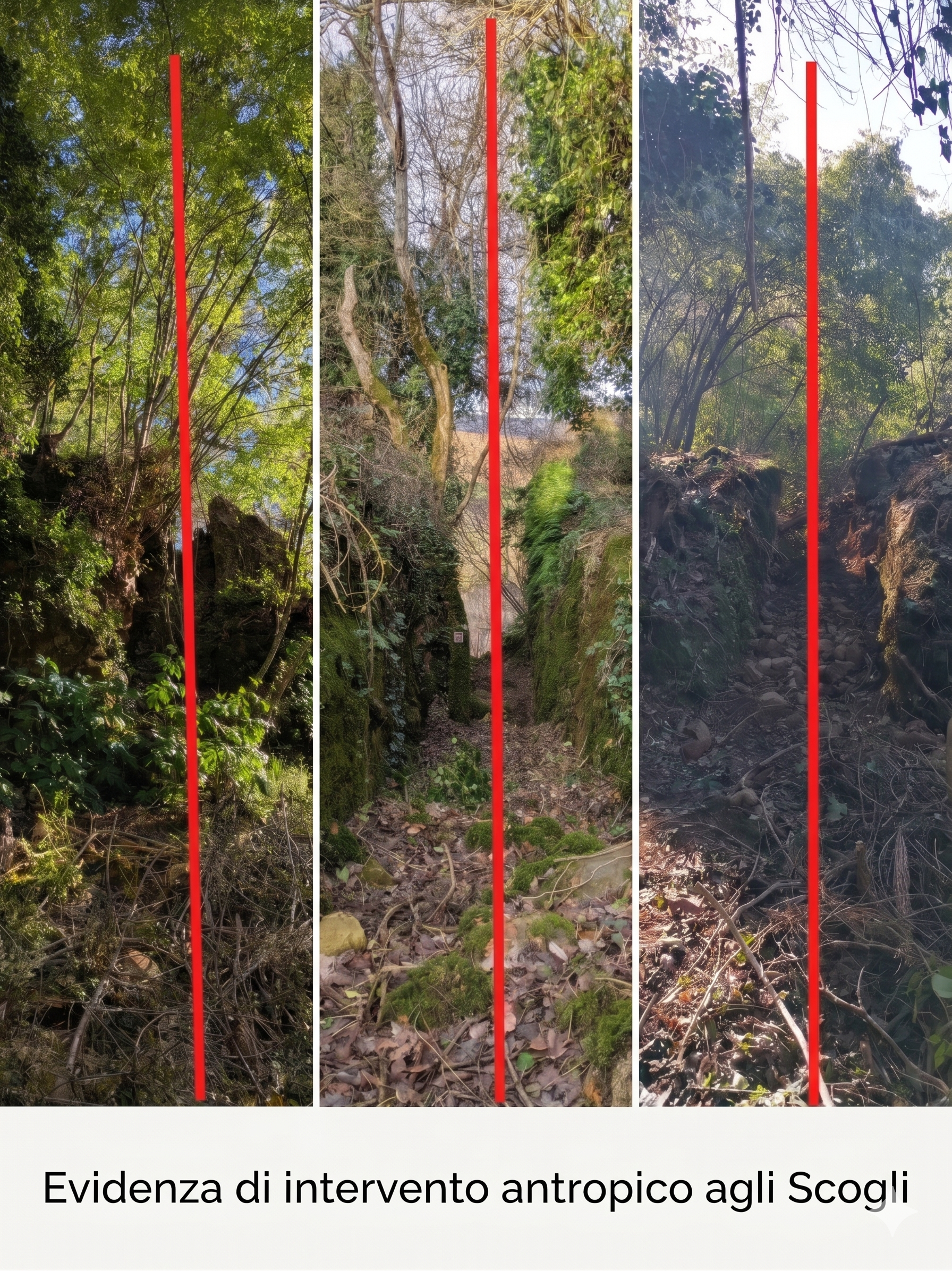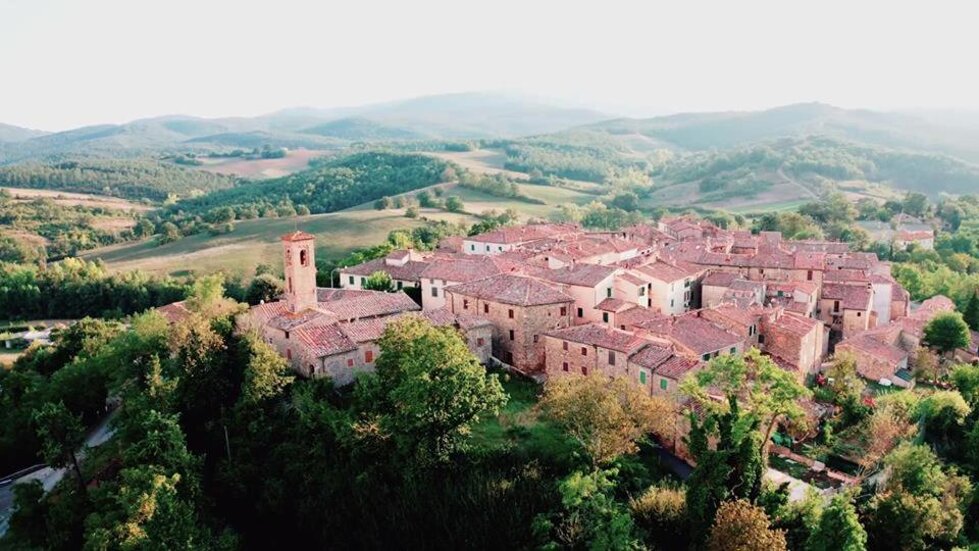
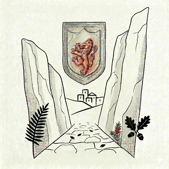
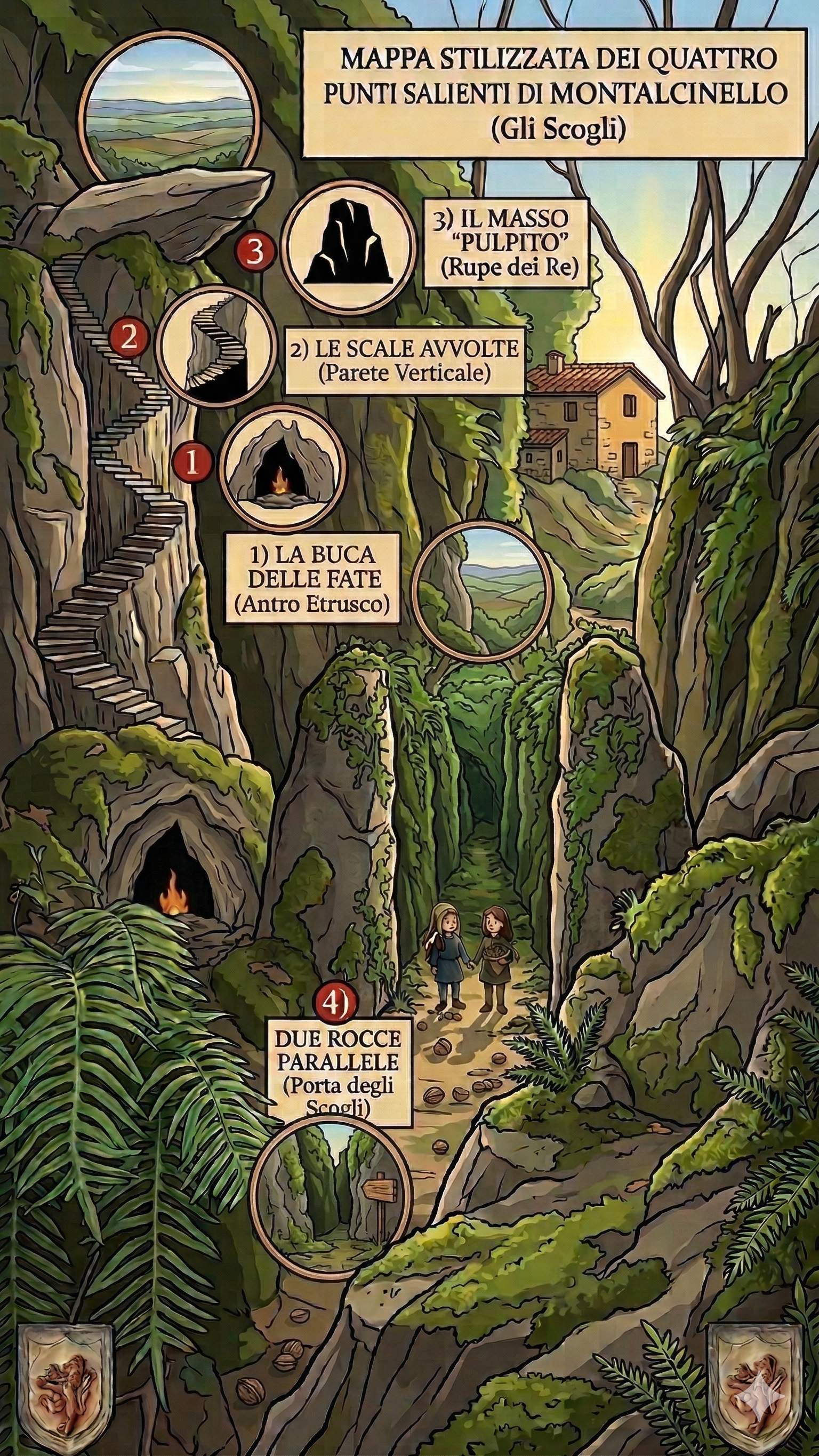
We have just identified four points on Montalcinello’s treasure map. This is not only the opening of a fable, but a true relic of oral geography. In peasant culture, before modern maps arrived, stories and legends served precisely to pass on to new generations the shape (or magic) of the land. Let’s review them:
1) The fairies’ hollow: a recurring place-name in sites of Etruscan origin (like nearby Papena).
2) The winding steps: a well-located place, but still waiting to be thoroughly explored.
3) The boulder called “Pulpit”: an ultra-panoramic spot, almost recalling the “Pride Rock” from The Lion King.
4) Two parallel rocks with an old road in between
Finding the place-name “Scogli” in a hilltop village like Montalcinello is a precious toponymic rarity. The area of the Vicolo degli Scogli is tied to one of Montalcinello’s most fascinating legends. Even Dante Alighieri in the Divine Comedy used this term to describe hard rocks, stone bridges, and the cliffs of Hell (e.g., the «rocchi del duro scoglio» in Malebolge). This name, in fact, has nothing to do with water, but preserves intact a very ancient origin: it comes from the Greek skópelos (from the verb skopéō, to observe) and literally meant a “place from which one watches”.
The scogli were precisely the crags or jutting cliffs used as lookouts to command the landscape.
It is no coincidence that, right among these rocks, the Pulpit Boulder rises up. This name echoes and confirms the same panoramic sense of the ancient “scoglio”: a natural projecting balcony, hanging over the void, from which to look out over the whole valley below. In church, the pulpit is the raised balcony from which the priest overlooks the nave to be heard.
But this hard stone was also the boundary between human toil and mystery. Dante physically leans on a rocky spur (“poggiato a un de' rocchi”) because he is shattered by anguish. Looking down, he sees the souls of soothsayers and magicians (those who in life claimed to look too far ahead into the future through magical arts). Not by chance, beneath the Scogli we find✨The Fairies’ Hollow: where the rock breaks into dark clefts and caves, peasant culture saw the unknown. These cracks were read as homes of ancient, mysterious spirits bound to the earth’s depths. It is bare, raw geology turning into magic.
🛤️ The Tagliata (the road between the rocks): The narrow passage described between these two parallel rock walls is far more than a striking example of very ancient road-making. This tagliata, laboriously cut into hard stone, is a true stargate: a vibrating threshold that connects our world with that of roots, memory, and deep time. Created with an almost metaphysical effort by our ancestors, it holds not only strategic geography, ancient legends, and linguistic rarities, but represents a magical place where the boundary between worlds grows thinner.
In Tuscany, all this is carved into the very same rock as in Montalcinello: a door that invites us to explore and to cross not only a physical path, but ourselves. 🪨🌿✨
.jpeg "Fewer words, more action! ⛏️🌿")