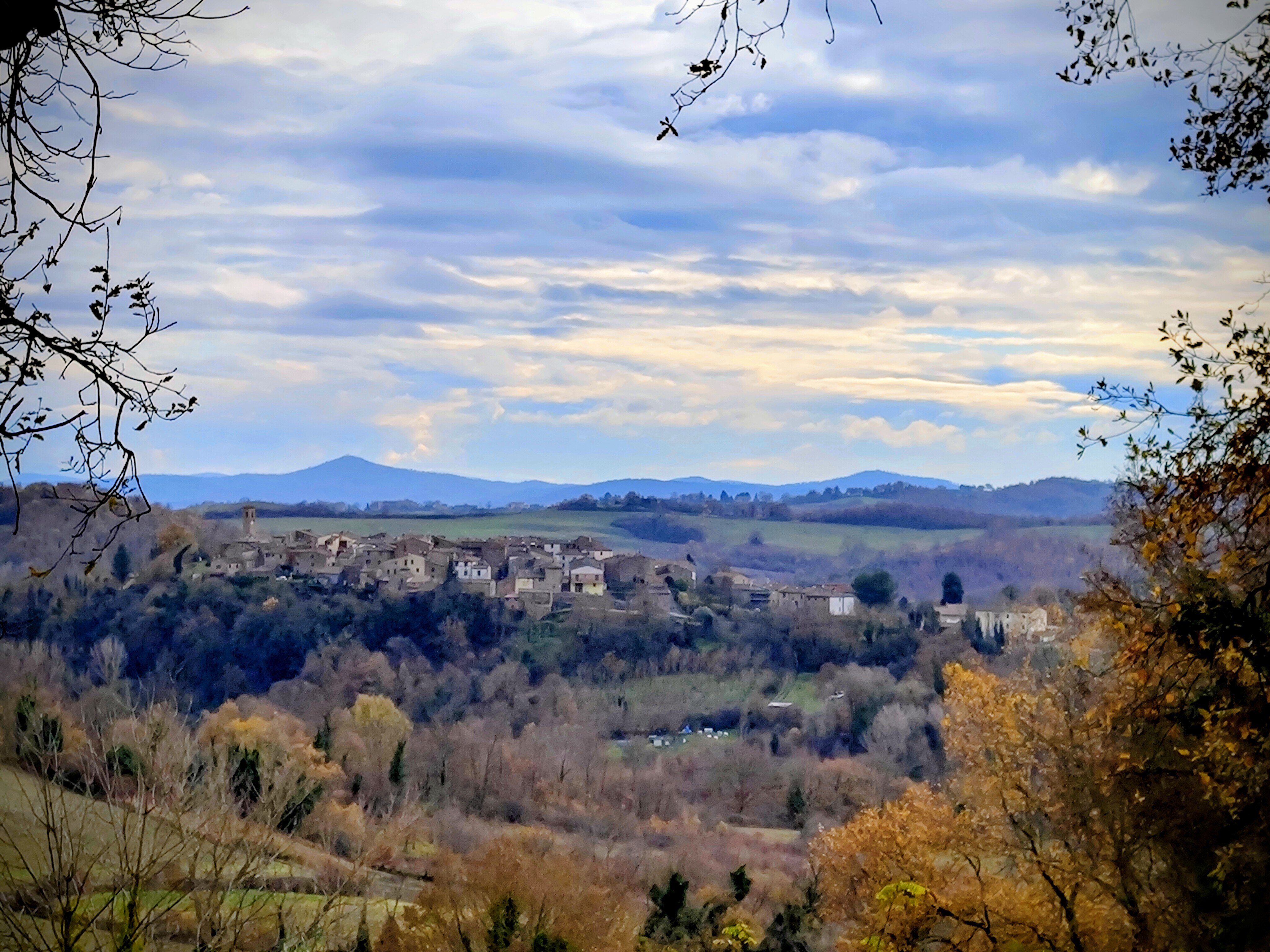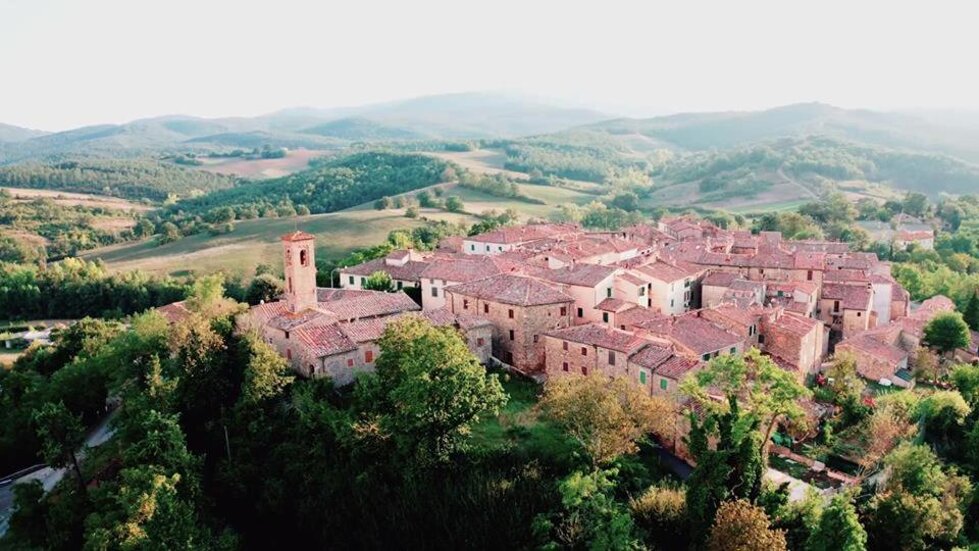
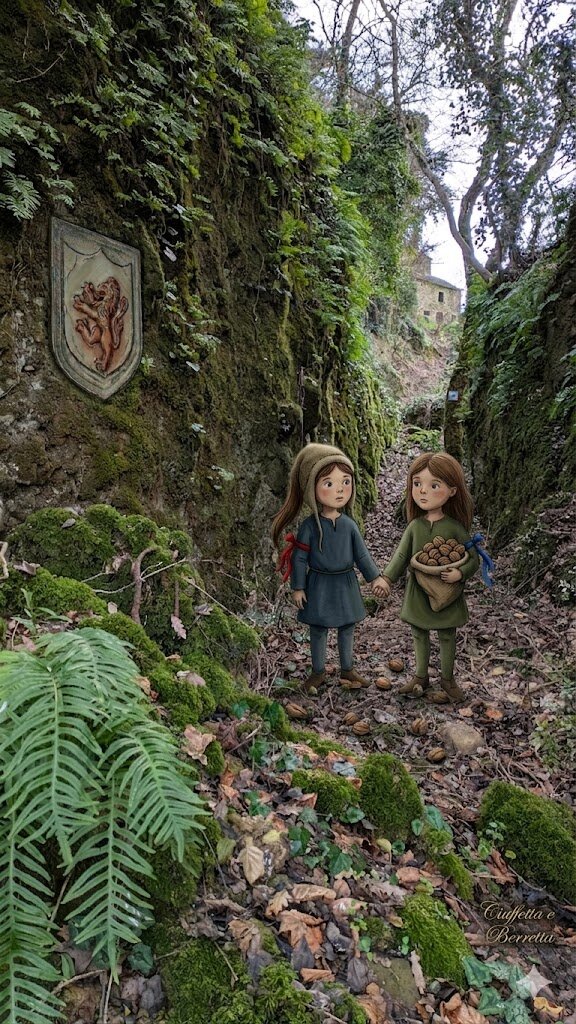
Fairy tales only come back to life when we turn off the TV, perhaps forever. And we must turn it off because that screen dulls us, paralyzes our conscience, and turns us from architects of our own world into couch zombies, incapable even of screwing in a lightbulb. We need to return to living and telling stories. Here in Montalcinello, this dream is possible.
The fact that the Scogli of Montalcinello were once the setting for countless adventures is still passed down through the village in tales bordering on legend, amid echoes of hand grenades thrown in play and hidden old arsenals. But one thing is certain: there is something profound and mysterious at the Scogli. Therein lies a large part of Montalcinello's secret identity. I believe Evaldo Serpi knew this. And his daughter Silvia, who writes and fights alongside us for the memory of these places, has always sensed it.
We believe we have made an important discovery, which we owe entirely to Evaldo's cultural legacy: having found in a peasant folktale he passed down to us, that of Ciuffetta and Berretta, a keystone for understanding the soul of Montalcinello.
In the fable, the Scogli—these enormous boulders guarding the northern slope of Montalcinello—are described as a place that gave the village much to talk about. This testifies to their primordial allure which, since the dawn of time, has influenced the life of the community. It is a borderland, a crossing between the safe world of the village and the wild nature (the bandita). And it is a place steeped in memories of all kinds, not only magical but also tragic, like the one on July 9, 1949, when little Furio Capanni, nearly three years old, lost his life by accidentally slipping while chasing a piglet.
This area, long left abandoned but recently the subject of our initial, months-long restoration effort, has always been the stage for popular tales.
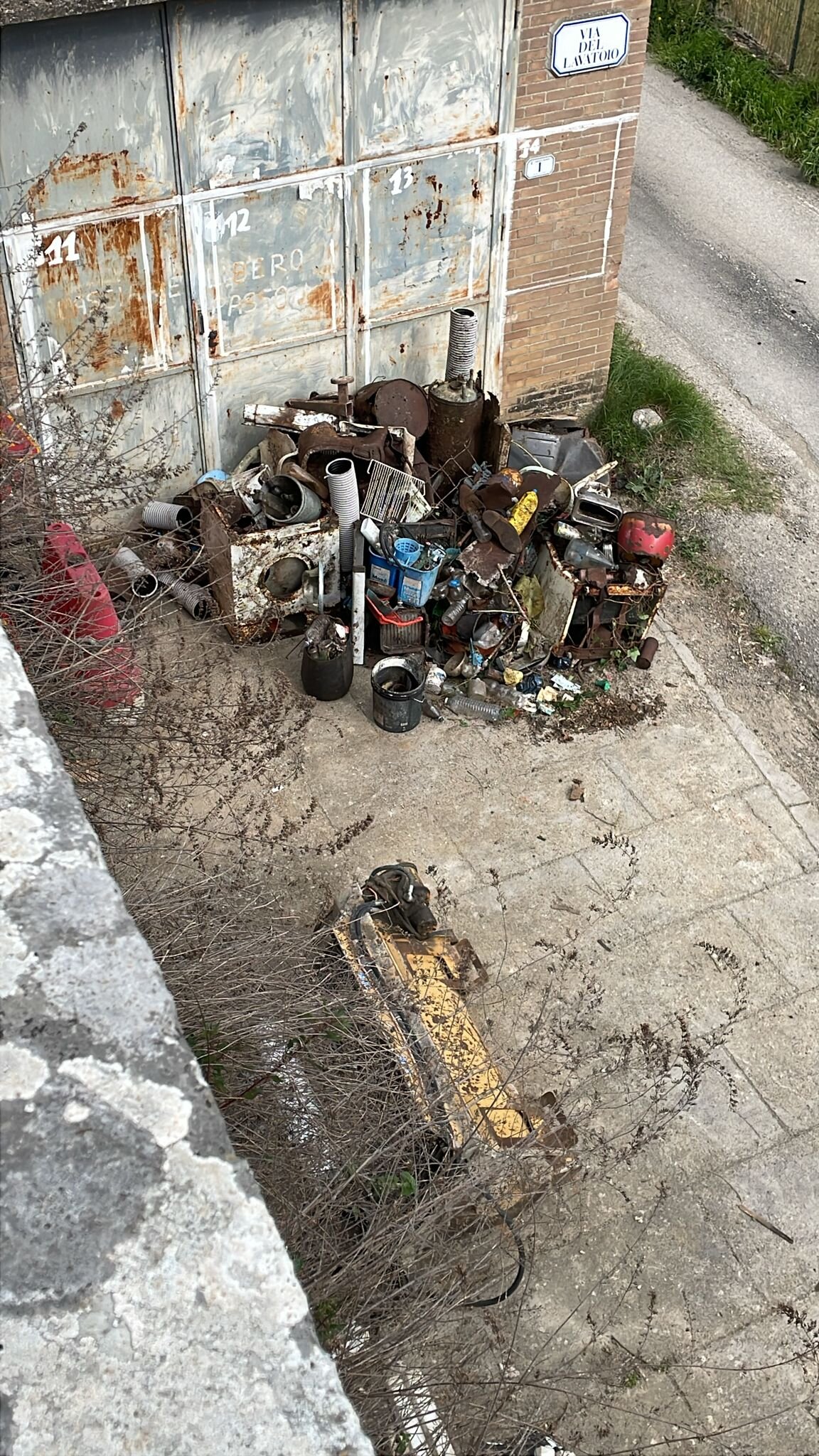
In recent weeks, the ProLoco has taken up the challenge, beginning to clear the area of waste. It is a massive undertaking that we hope will continue and inspire everyone, uniting citizens and institutions. We know that change can meet with resistance, even when it serves to establish a fundamental principle: the Scogli are a unique ecosystem to be protected and defended, and defacing them is no longer tolerable.
Among the legends passed down orally, one stands out concerning a tower-house located on what is now "Via degli Scogli": it is said that its underground levels concealed a trapdoor, the entrance to a secret tunnel leading to the facing Pieve di San Giovanni a Sorciano (present-day Cerciano).
Returning to the fable of Ciuffetta and Berretta, the discovery we consider remarkable is the precision with which the tale maps the territory, citing specific places:
La buca delle fate (The fairies' cave): a recurring toponym in sites of Etruscan origin (like nearby Papena).
Le scale avvolte (The winding stairs): a well-identified location, but one that still awaits thorough investigation.
Il masso chiamato "Pulpito" (The boulder called "Pulpit"): a highly panoramic spot, almost reminiscent of Pride Rock from The Lion King.
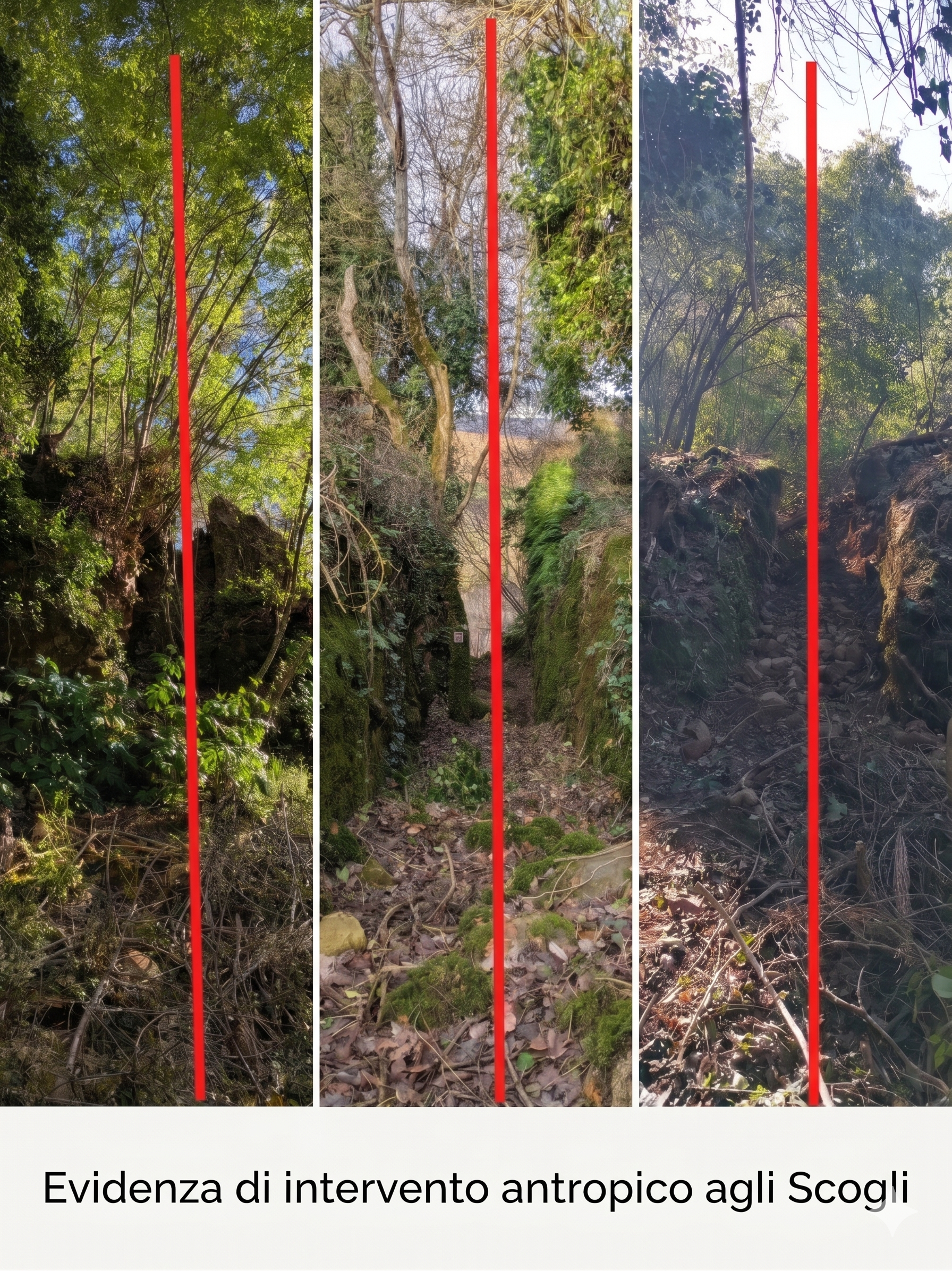
Due rocce parallele con nel mezzo una vecchia strada (Two parallel rocks with an old road in between): and this is precisely the crucial detail.
.jpeg "dietro-(1).jpeg")
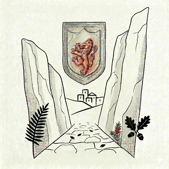
These two parallel rocks have convinced us that an ancestral symbol of Montalcinello, alongside its official coat of arms, is this stone gate. It is not recorded in the village statutes, nor on recent maps. While a cautious academic approach attributes this "tagliata" (cut) to the medieval foundation of the village, to us simple villagers it seems we can glimpse something much older. The immense labor required to excavate the rock, combined with its apparent defensive and practical "futility" (being easily bypassed), could take us back to the time of the Etruscans. They were the undisputed masters of shaping stone (the anomaly would be that ours is not tuff) to create what we know today as "vie cave" or "tagliate". Medieval man was more focused on moats, walls, and towers, on building a San Gimignano upwards, so to speak. At the moment we are moving in the realm of hypotheses (but we believe it is right to share these transparently as well, whether they are right or wrong), yet the fern typical of these ancient paths is present. And above all, there is that familiar solemn and mysterious sensation, similar to the coolness one feels entering the twilight of a sacred place, as our churches later became.
The fable also tells us that the Scogli were once dominated by gigantic walnut trees, centuries old, so tall they almost touched the roofs of the houses. It is in this magical forest that the adventure of Ciuffetta and Berretta begins. It is no coincidence that the story unfolds right here, and it is no coincidence that the core of the tale is one of the girls' refusal to return to the village: at the Scogli, in unspoiled nature, Ciuffetta is happy; here, Ciuffetta has metaphorically planted her sword in the stone. Only an amusing and inexorable chain of events (which recalls natural rhythms and the pangs of hunger) will manage to bring the two heroines back. But I don't want to give any more spoilers: I will leave you to read the fable exactly as Evaldo transcribed it for us.
The bad news is that the Scogli, unfortunately, are not yet open to the public (and especially not to Ciuffetta and Berretta). The good news is that the idea of transforming this area into a large landscape and cultural park is gaining ground. The path to securing it and making it accessible is arduous. It will require coordination among private owners, sweat, fatigue, and a lot of manual labor. Exactly the work that awaits us, and that we will be able to tackle only after having finally found the courage to turn off the TV.
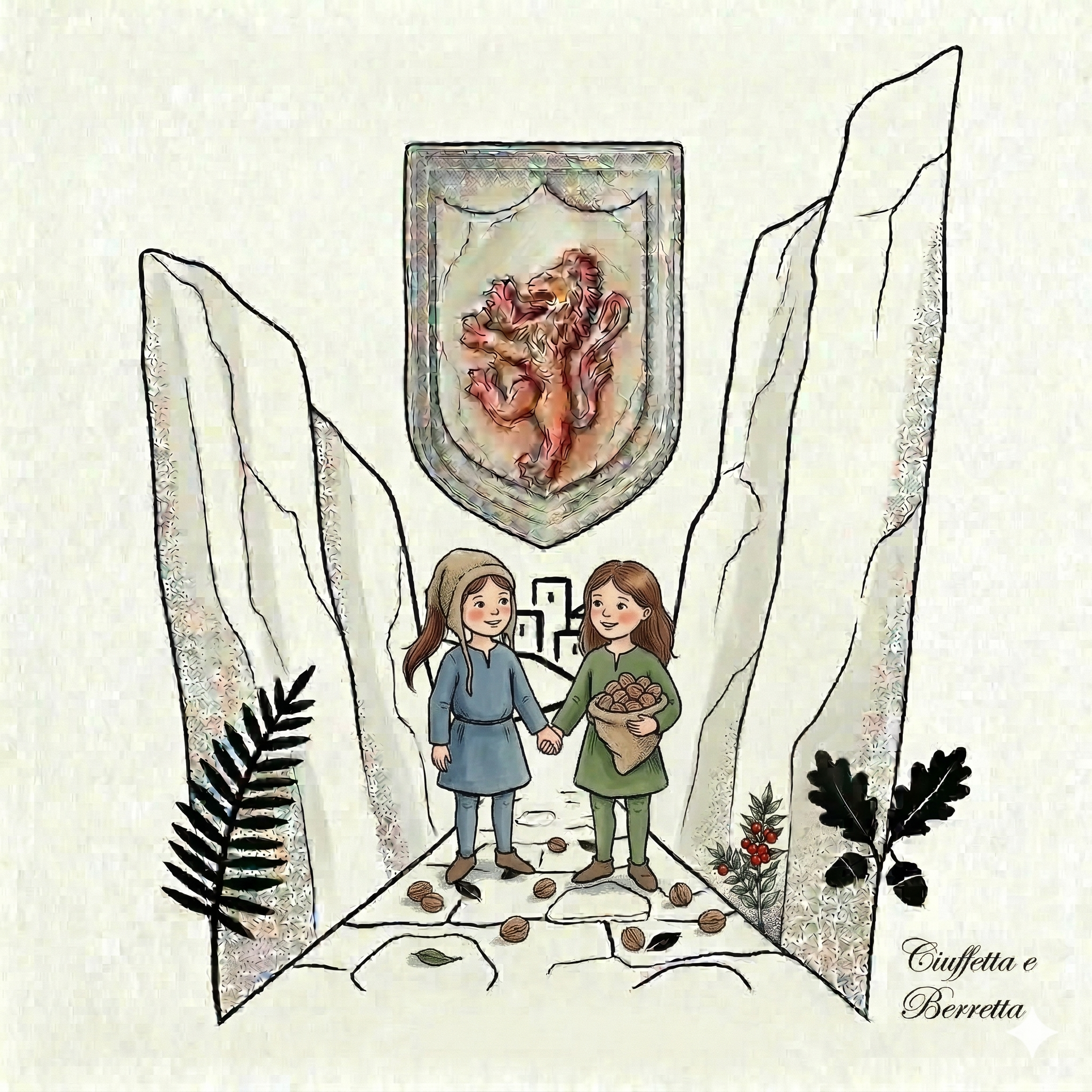
CIUFFETTA AND BERRETTA
A long time ago, in a village, a woman gave birth to two beautiful little girls with round faces, red and white like apples. They were as alike as two drops of water, so much so that to tell them apart when feeding them, their mother tied different colored ribbons around their arms. They grew up healthy and lively, and were the pride and joy of their parents. When they reached the age of five or six, their mother made them two little woolen caps, leaving a longer tuft of hair sticking out for one of them so she could tell her apart from her sister. Because of this, the villagers named them Ciuffetta (Little Tuft) and Berretta (Little Cap). These little girls never wandered far from home; they played in the village alleyway, and their mother would call to them and keep an eye on them from the window.
To the north of the village stood a tall, massive boulder called the "Scogli" (the Rocks), and the villagers often and willingly talked about it. In fact, it was said that there was the fairies' cave, the winding stairs, a boulder called the pulpit, two parallel rocks with an old road in between, and many, many walnut trees, hundreds of years old, so tall they reached the height of the houses.
Ciuffetta and Berretta, intrigued by all these tales, decided one beautiful day in late September, without telling their mother anything, to go look for walnuts under the Scogli. The ground beneath the walnut trees was clear, with leaves acting as a carpet. The two girls ran and rolled around on the ground, having a wonderful time. Besides playing, they also found walnuts, and not knowing where to put them, they took off their caps and filled them up. In no time their caps were full of walnuts, the big bell of the bell tower struck noon, and it was time to go home.
"Hurry up, Ciuffetta, your cap is full," her sister said. "Let's go home, Mother must be looking for us by now." "No, I don't want to come. I want to stay here a bit longer, I like it here." "If you don't come home, I'll go tell the dog to bite you." "No, no, I'm not coming. Tell whoever you want."
So Berretta went to the dog and said, "Dog, go bite Ciuffetta, whose cap is full but she won't go home." "No," said the dog, "I won't bite anyone." "Then I'll tell the stick to beat you: Stick, go beat the dog, because the dog won't go bite Ciuffetta, whose cap is full but she won't go home." "No, I won't beat anyone." "Then I'll tell the fire to burn you." "Fire, go burn the stick, because the stick won't go beat the dog, the dog won't go bite Ciuffetta, whose cap is full but she won't go home." "No, I won't burn anything." "Then I'll tell the water to quench you." "Water, go quench the fire, because the fire won't go burn the stick, the stick won't go beat the dog, the dog won't go bite Ciuffetta, whose cap is full but she won't go home!" "No, I won't quench the fire." "Then I'll tell the ox to drink you." "Ox, go drink the water, because the water won't go quench the fire, the fire won't go burn the stick, the stick won't go beat the dog, the dog won't go bite Ciuffetta, whose cap is full but she won't go home!" "No, I won't drink the water." "Then I'll tell the rope to tie you." "Rope, go tie the ox, because the ox won't go drink the water, the water won't go quench the fire, the fire won't go burn the stick, the stick won't go beat the dog, the dog won't go bite Ciuffetta, whose cap is full but she won't go home!" "No, I won't tie." "Then I'll tell the mouse to gnaw you." "Mouse, go gnaw the rope, because the rope won't go tie the ox, the ox won't go drink the water, the water won't go quench the fire, the fire won't go burn the stick, the stick won't go beat the dog, the dog won't go bite Ciuffetta, whose cap is full but she won't go home!" "No," said the mouse, "I won't go." "Then I'll tell the cat to eat you." "Cat, go eat the mouse, because the mouse won't go gnaw the rope, the rope won't go tie the ox, the ox won't go drink the water, the water won't go quench the fire, the fire won't go burn the stick, the stick won't go beat the dog, the dog won't go bite Ciuffetta, whose cap is full but she won't go home!"
The cat, who hadn't eaten for days, didn't need to be told twice when he heard there was a mouse, and swiftly went to eat it. The mouse, seeing the cat, ran to gnaw the rope. The rope, feeling the first bite, swiftly went to tie the ox. The ox, realizing he was being tied, immediately went to drink the water. The water, not wanting to be drunk, went to quench the fire. The fire, seeing the water, quickly went to burn the stick. The stick, so as not to be burned, went to beat the dog who was lying down sleeping.
At the first blow of the stick, the dog woke up and ran to bite Ciuffetta. Ciuffetta, when she saw the dog with his mouth open wanting to bite her, immediately turned and ran toward home. Once Ciuffetta and Berretta arrived home, they were scolded by their parents who had been worried sick, and from that day on, they never wandered away from home again without asking their mother's permission.
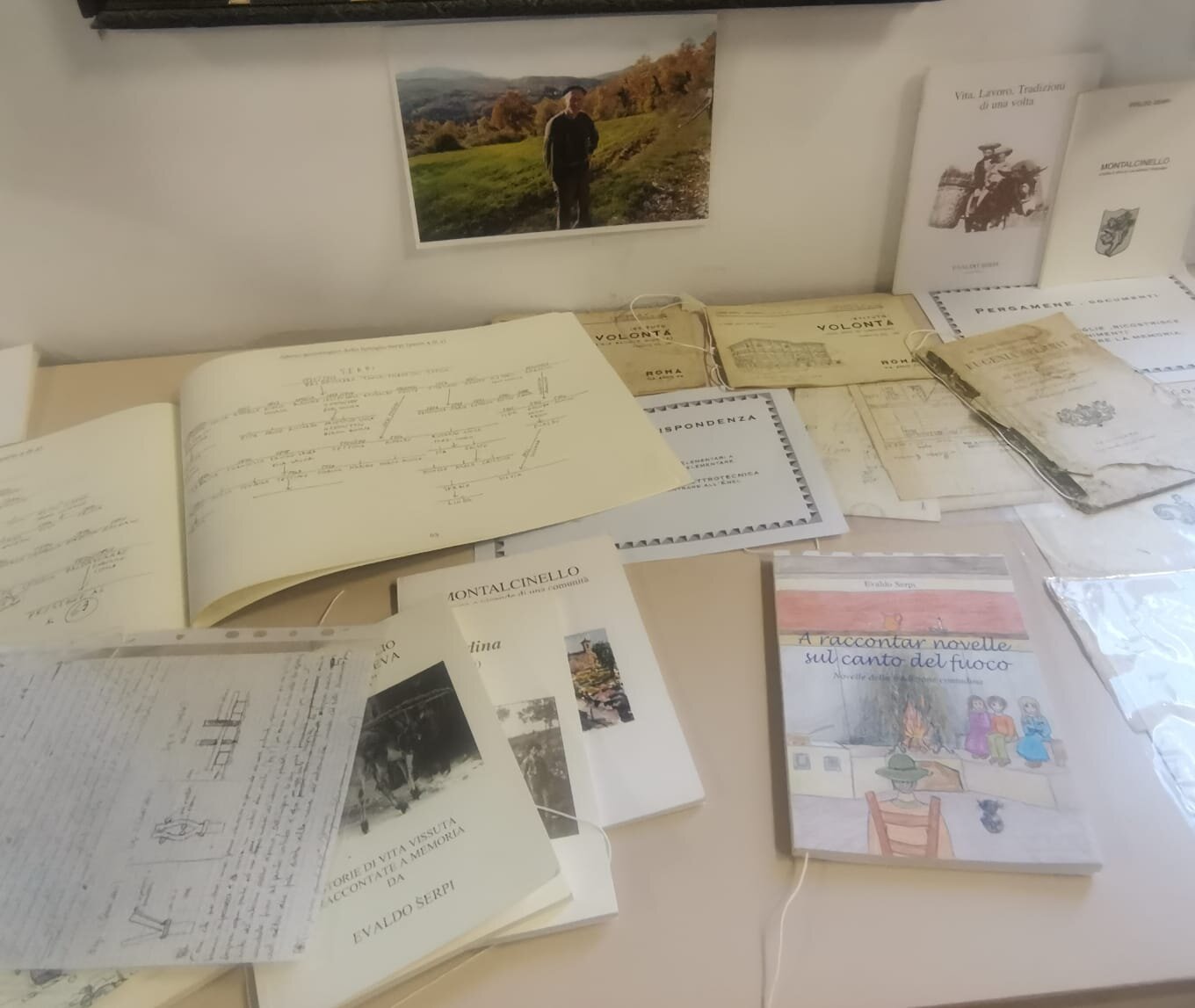
(Source: Evaldo Serpi, A raccontar novelle sul canto del fuoco, Novelle della tradizione contadina [Telling tales by the fireside, Tales of the peasant tradition], 2006)
.jpeg "Fewer words, more action! ⛏️🌿")