That Rome was centralist and narcissistic was understood even by the Etruscans, who nevertheless ended up losing their battle. Two civilizations at opposite poles: Rome hierarchical, military, and vertical; Etruria more community-oriented, almost federal (see the federation of independent city-states including our beloved Volterra), deeply connected to nature.
The Romans were obsessed with law and order, with consular roads, with legions and praetorians ready for the Roman salute: a martial discipline that, many centuries later, would generate a grotesque imitation, leading us to twenty years of oblivion and some of the most embarrassing military defeats.
Just think of when our royal army fled through the fields of Albania, unable even to break through into Greece. Or the Russian campaign, where tens of thousands of soldiers perished far from home, in the most chilling cold. Or again in the scorching heat of El Alamein, where Mussolini, in his delirium, even brought a white horse, imagining he would enter Alexandria like Alexander the Great. The British, instead, greeted us with artillery, and it was a massacre.
Yet, despite everything, that Roman goose-step, that truncheon, continue to make themselves felt.
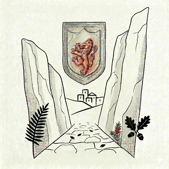
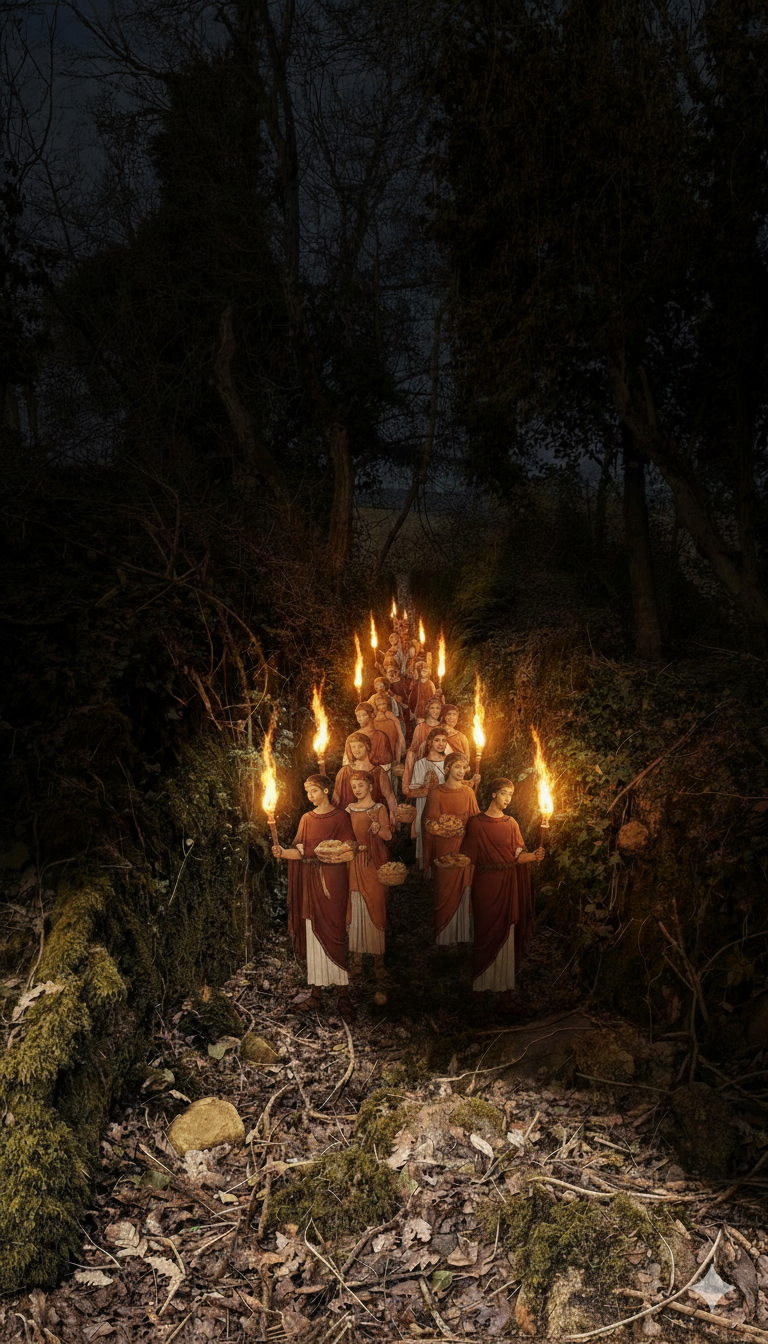
The Etruscans, on the other hand, had an almost sacred love for nature, which they equated with the gods themselves. A spiritual relationship with the landscape, with the woods, with the rock they carved to go deep in a procession and initiation journey probably later taken up by Dante. But Rome won.
And with Rome, centralist logics also won.
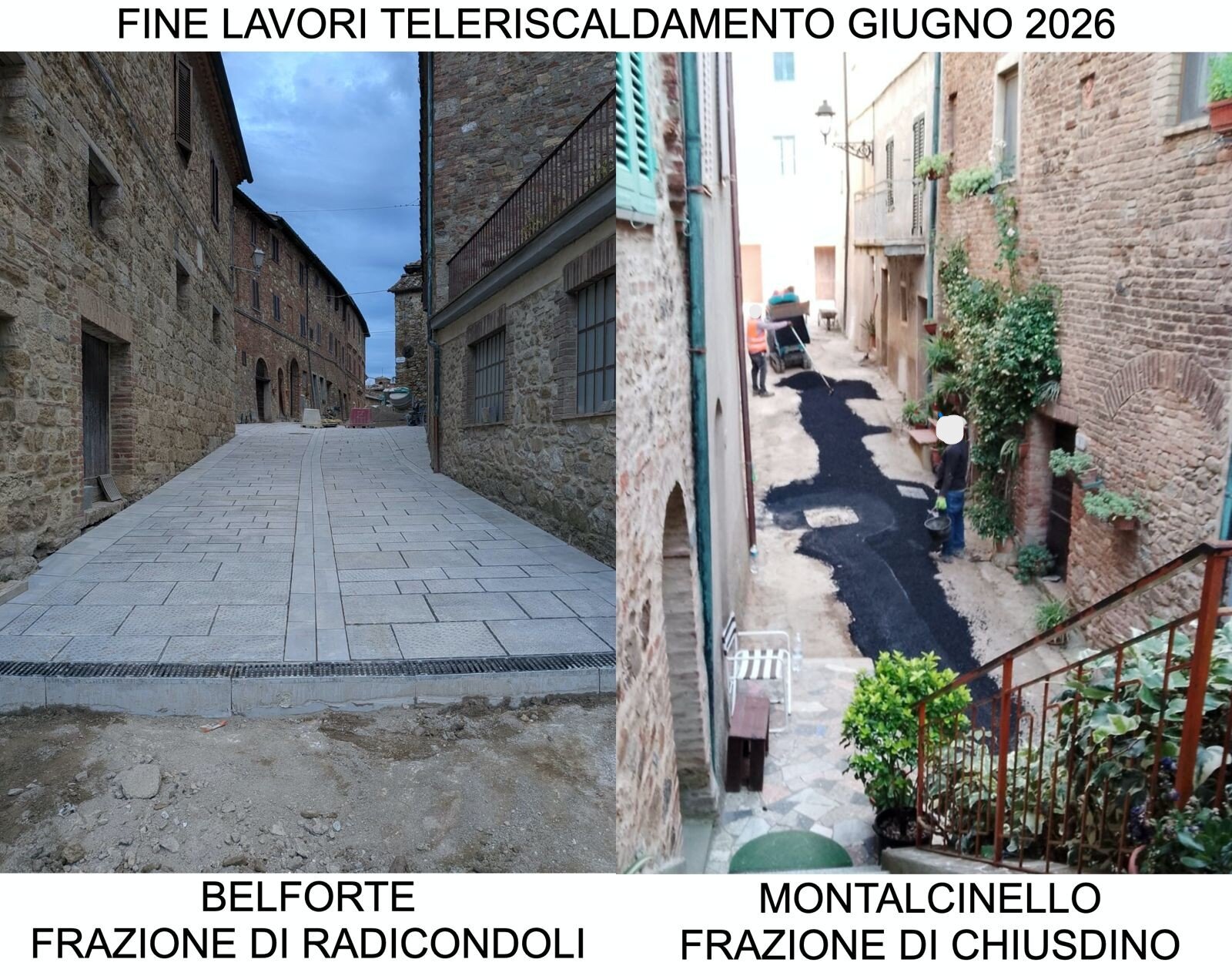
Logics that still today completely neglect rural realities. The State does not allocate resources that would allow semi-mountain villages to survive. The roads are slowly swallowed up by greenery, become uneven; the most basic systems for purifying water, speed bumps, parking lots, multipurpose halls are missing. There is a lack of investment to develop trails, renovate ancient buildings, promote culture and social life.
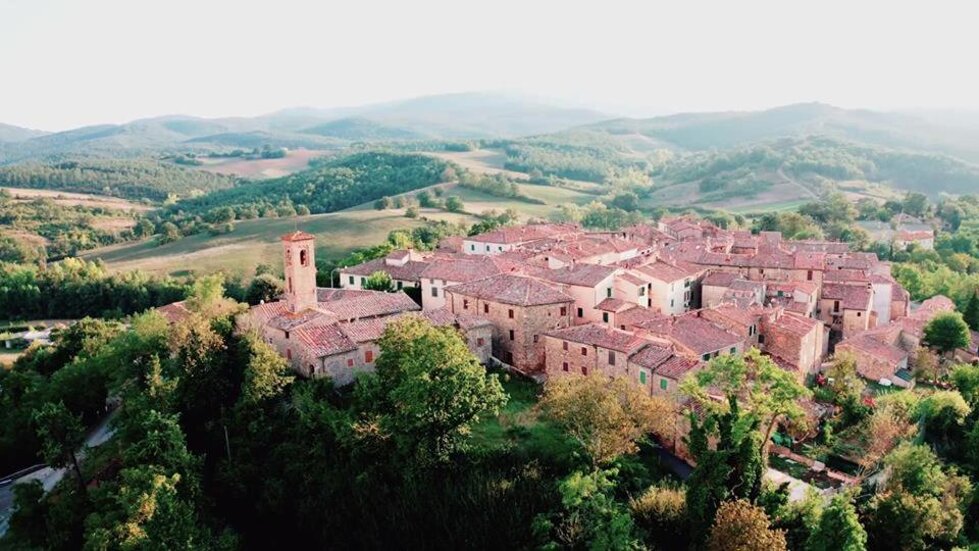
Faced with this risk of disappearing, Montalcinello represents a small laboratory of survival.
Here, people fleeing the chaos of the world meet: stubborn, strong-willed individuals, often outspoken. Here the woods and wild nature toughen people and prepare them to resist the assault of machines and the alienation of that intelligence they call artificial and which, like a mantra, is spreading everywhere.
In Montalcinello, instead, we invest in natural intelligence.
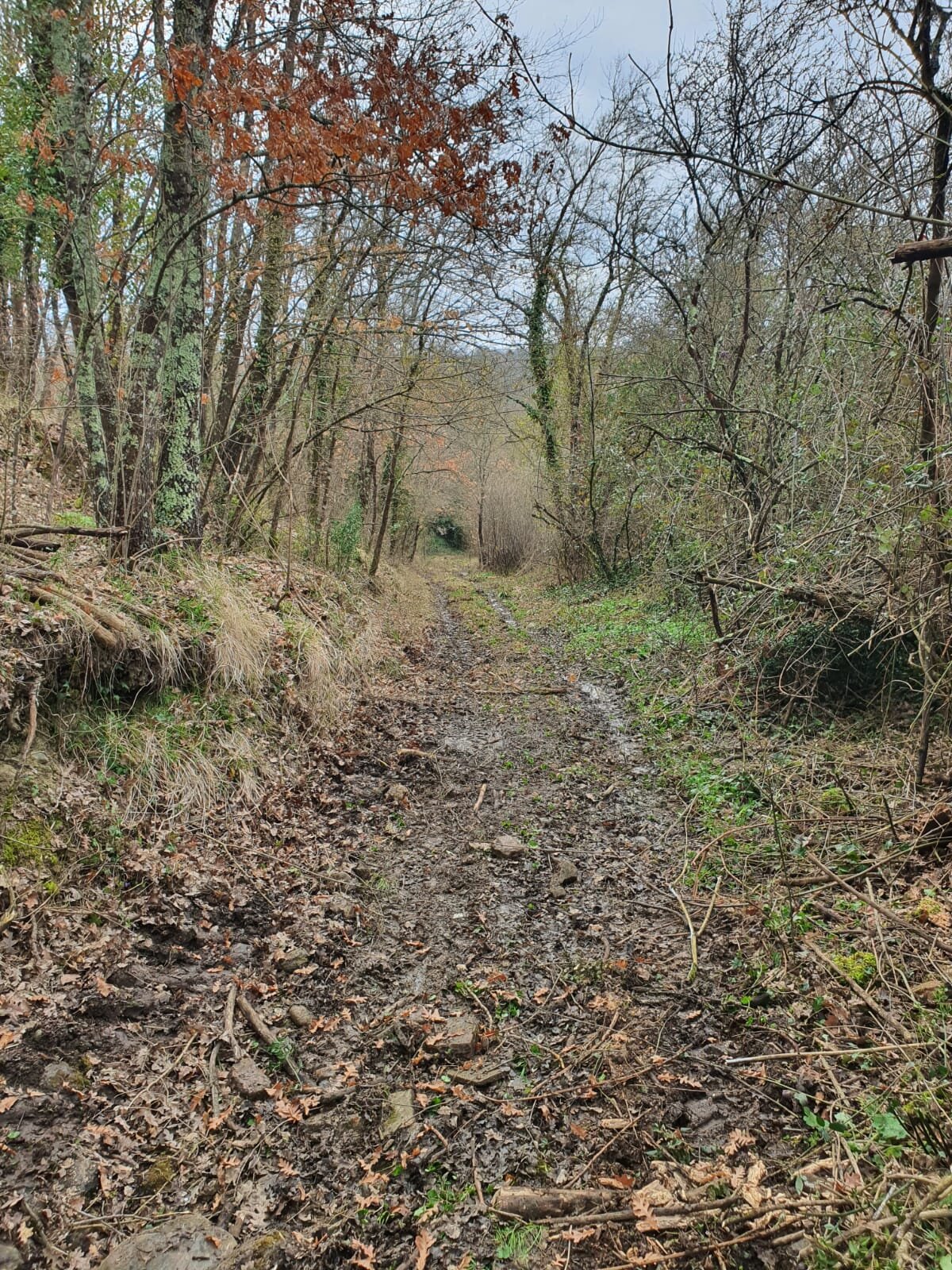
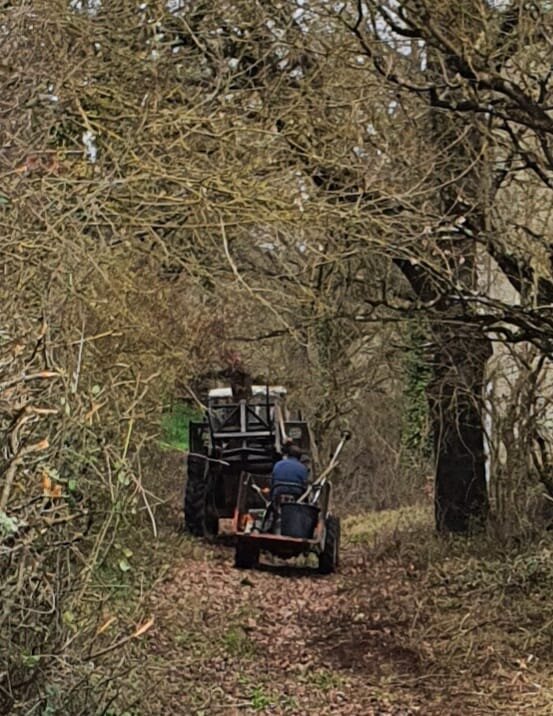
Just today the Pro Loco restarted the engines and cleaned up the ancient Lumachino road that goes from the old washhouses to the oratory of the Madonna della Consolazione. I am publishing the photos to celebrate how actions matter more than all the words of a typical meeting, where everyone promises great intentions. That road maintenance was a serious matter is also recalled by the ancient Statutes of Montalcinello, which provided for four officials, the viarii, in charge of coordinating teams for paving and cleaning the main roads. The Statutes mention, in particular, these roads:
- the road that leads from the gate to the Pieve (probably the current via della Franata);
- the road from Campo Ritondo to Gessi (to be identified);
- the road that leads to the Abbey, that is, from the ditch to the Aia Vecchia (it is imagined as a connection with the abbey of San Galgano);
- the road from Bisciano to Filicaia (today not identified with certainty).
When the State is absent and institutions are deaf, only one way remains: roll up your sleeves, stay light, turn off the TV that anesthetizes the soul, and train natural intelligence among the woods.