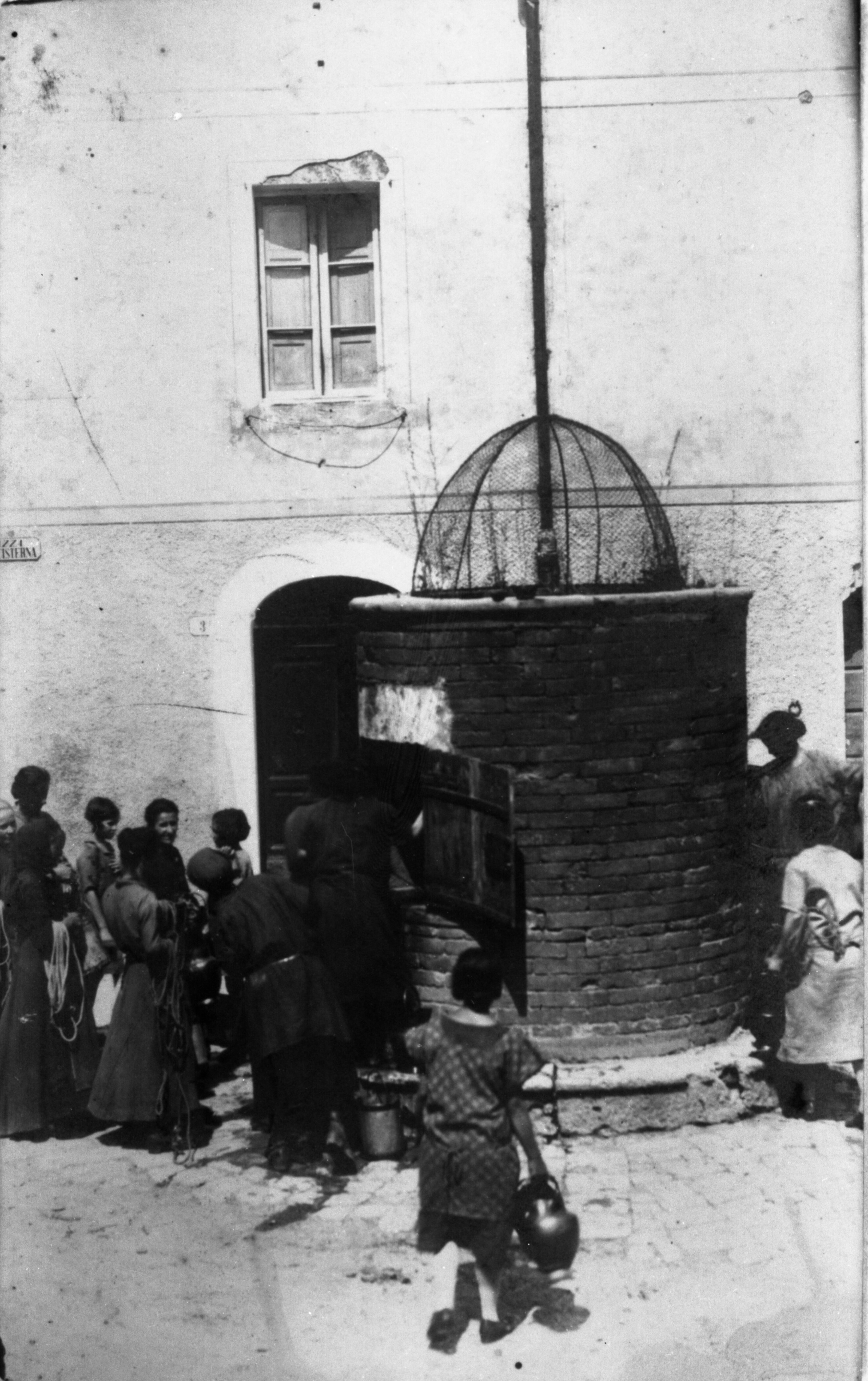
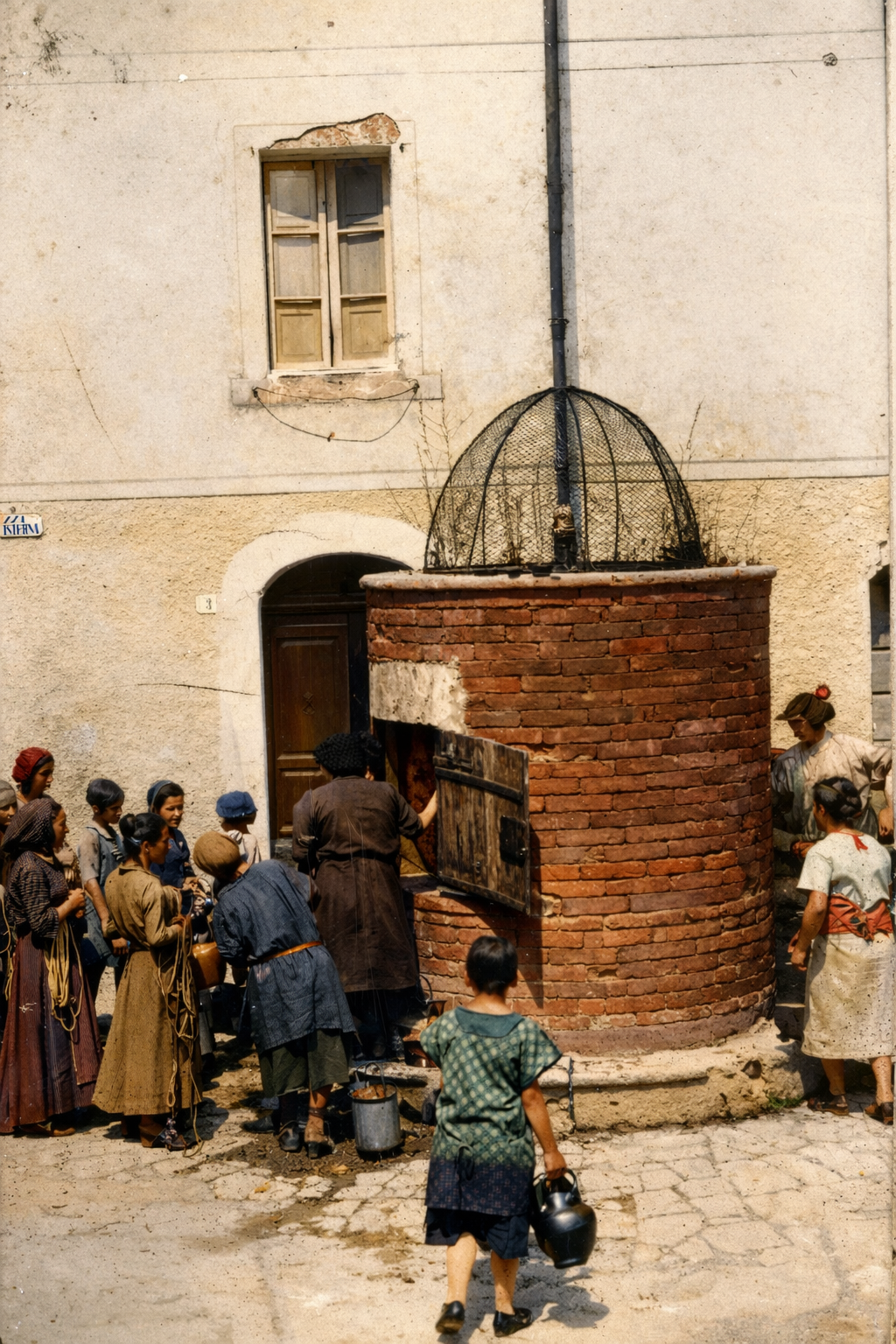
This color reworking of a real photograph from 1925 (shown below) gives us an authentic glimpse of daily life in Montalcinello, when water was not an automatic gesture but a collective ritual.
At the center of the image stands the brick cistern, a solid and austere cylindrical structure, with the hatch open and the metal dome protecting the upper opening. A gathering point, a place where stories, waiting, and exchanges intertwined.
Around the cistern, women and children gather. The women wear simple clothes, aprons, dark shawls: sturdy fabrics, natural colors, suitable for daily work. Some hold ropes and metal buckets, others wait their turn. You can sense a spontaneous order, a community accustomed to sharing.
In the foreground, a little girl walks toward the cistern with a container in her hand. It is a powerful detail: even the youngest participated in the collective life of the village. Water was everyone's responsibility.
This image tells much more than just a cistern. It tells of a world where the square was the beating heart of the village. Where fetching water became an opportunity for meeting, exchanging news, and solidarity.
Before modern aqueducts, before domestic convenience, the cistern was life.
And today, looking at this scene, we do not see just an infrastructure: we see a community.