Anyone can read about Etruscan fortified sites, oppida, in the history of Radicondoli, history and archaeology of a municipality in the Siena area.
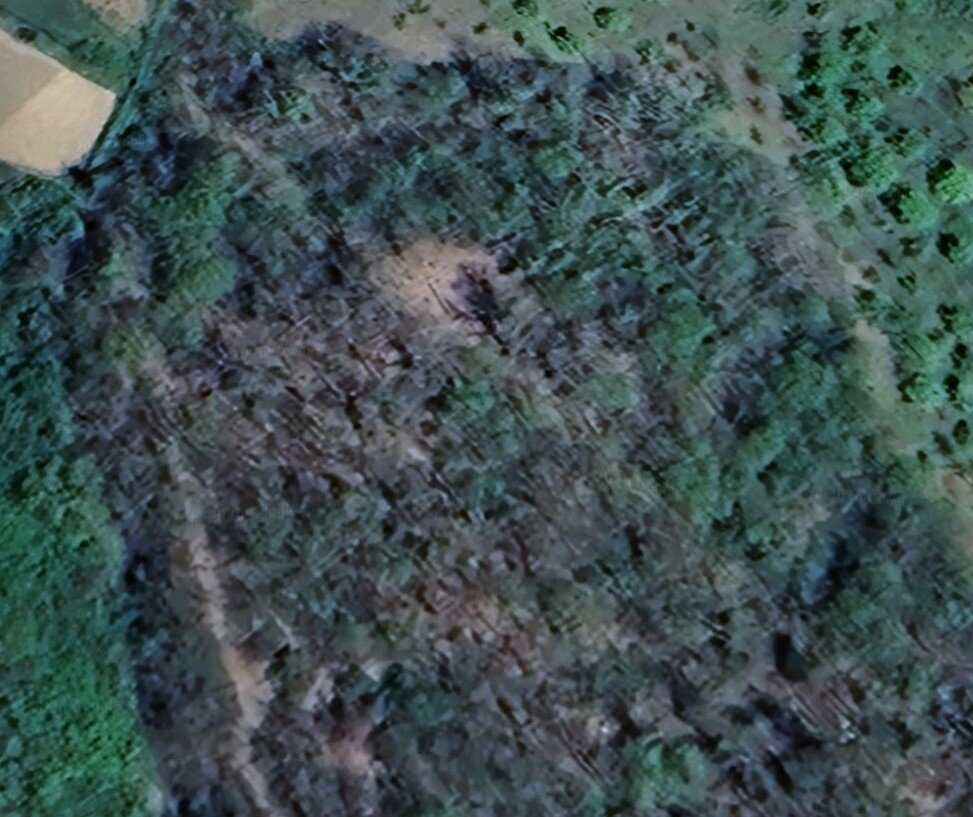
Looking at the image of the Lumachino of Montalcinello, you can clearly see traces in the woodland that follow a circular or elliptical course around the top of the rise. This “concentric circles” pattern (we seem to see three) that fits the contour lines (orography) of the hill is in fact extremely typical of ancient fortified hilltop settlements. Once again, these are hypotheses.
The term oppidum is of Latin origin and was used by the Romans to describe fortified centres, often located in elevated positions, typical of Italic, Celtic and Etruscan peoples. In the Siena area (and more generally in inland Etruria), these sites are of fundamental archaeological importance.
The layout described above is a classic of ancient defensive architecture. The Etruscans did not build these fortresses with rigid geometric shapes (as the Romans would later do with square castra), but followed the nature of the terrain.
The concentric structure made it possible to have multiple lines of defence. If enemies broke through the first ring, the defenders could fall back to the upper one, until reaching the last stronghold, located at the highest and most defensible point. This last one was used until 1993 for the May Day celebration and, perhaps, earlier as a threshing floor. In a pit on the side, apparently, stones were fired to produce lime.
The Lumachino too (threshing floor or oppidum) in Montalcinello’s cultural heritage!