The oldest written evidence of the territory
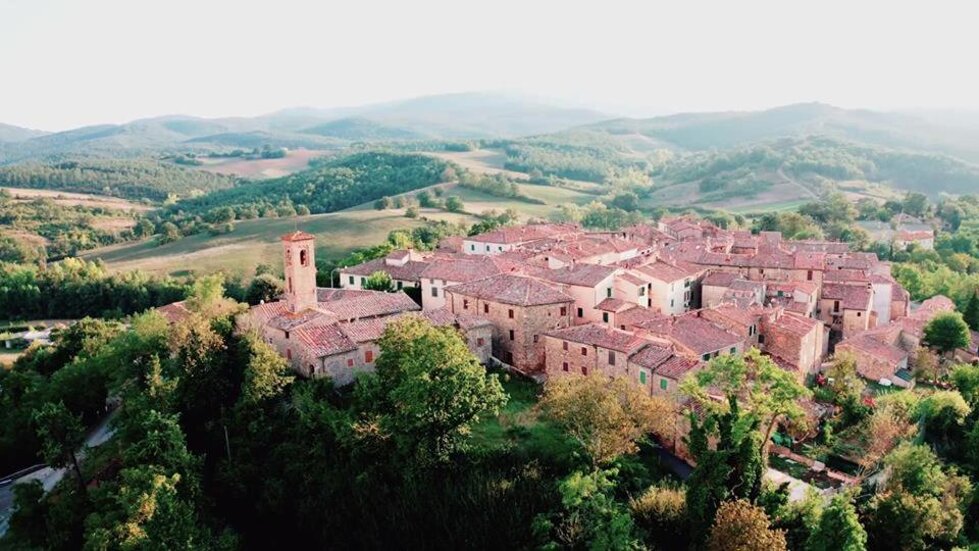
Until the first centuries after Christ, the territory that today surrounds Montalcinello appeared as a wild, impenetrable, and scarcely inhabited landscape. Virgin woods of oaks and centuries-old turkey oaks, brambles, and thickets. According to sources reported by the historian Evaldo Serpi, the first inhabitants of the area initially arrived from Etruscan Volterra and, later, from Lombard Lucca. The first settlements in the territory, including Fibbiano and Casella-Cerciano, seem to have arisen in the 1st century AD.
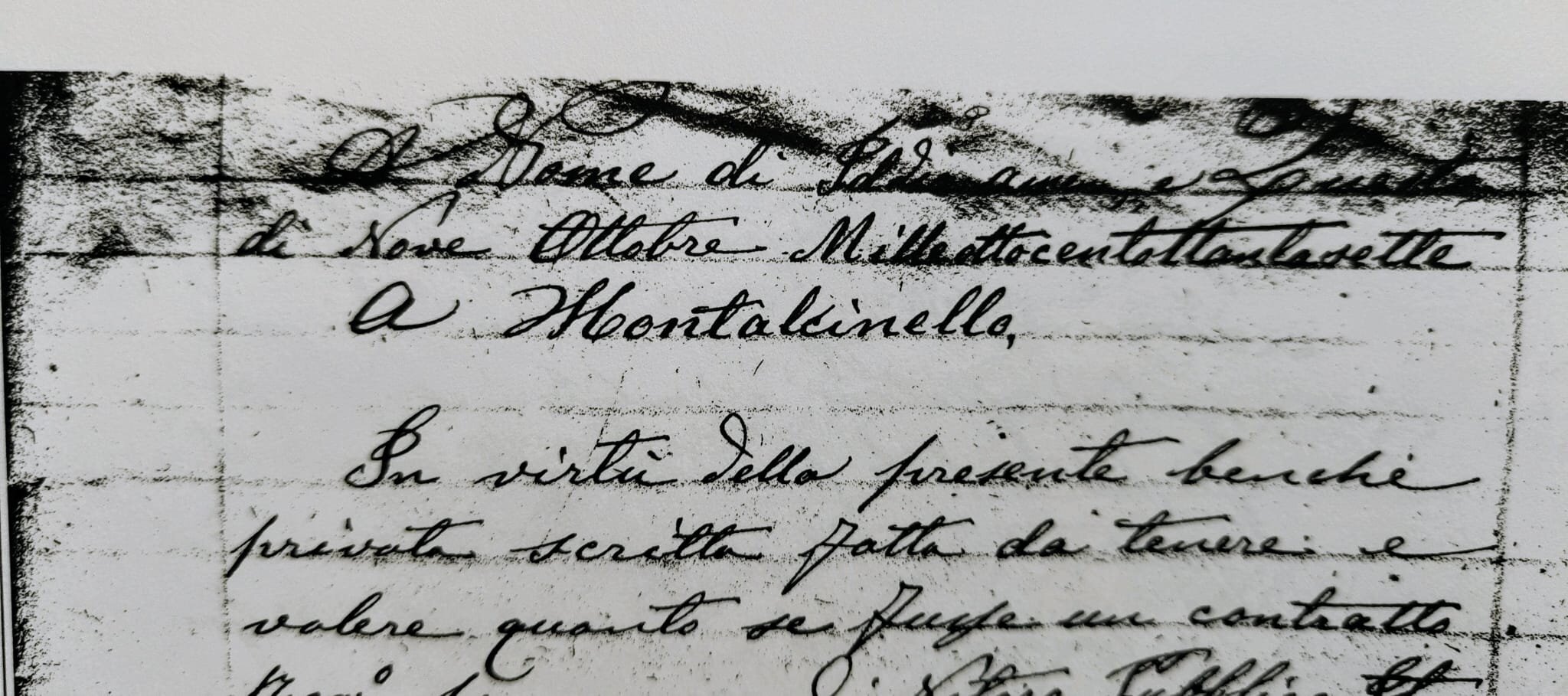
Among all the centers in the area, Montalcinello is the first to emerge from written history before the year 1000. Its first documentary traces date back to the 10th century, precisely to 918. No other surrounding settlement appears in such ancient sources: Chiusino will only be mentioned in 1134, Monticiano in 1171, Elci in 988, Frosini in 1004, while Radicondoli and Montingegnoli will appear in documents only in 1156.
The village that opens history
The first written evidence is a parchment from 918, now preserved in the Episcopal Archive of Volterra, known as the Carta di Rigonzano presso Monte Elcino. In it appear the names of «Adelardo Episcopo, Orso and Leo brothers, Ardrigo son of Sighelberto and Pietro Notaro», an essential list that opens a window onto the life of this community in the early Middle Ages. The toponym Monte Elcino, as already mentioned in thearticle on geothermal energy, preserves in its name the memory of its origins; Rigonzano, on the other hand, is still today the stream that flows along the southern slope of the village. In this aforementioned document, the bishop of Volterra, owner of the entire castle, leases to Adelardo Episcopo and the Orsi brothers houses and lands located in the locality of Rigonzano. Subsequent documents tell of a continuity of acts of sale, leases, and donations, a sign of a lively and structured community. In fact, the second document, dated 943, records the leasing of a house and some lands to Mr. Terentino.
It is likely that most of the buildings of the time were made of wood and have therefore disappeared or been profoundly transformed. However, during sewer works in the 1980s, two very ancient stone pits were discovered, round and several meters deep: silent traces of a very ancient human presence.
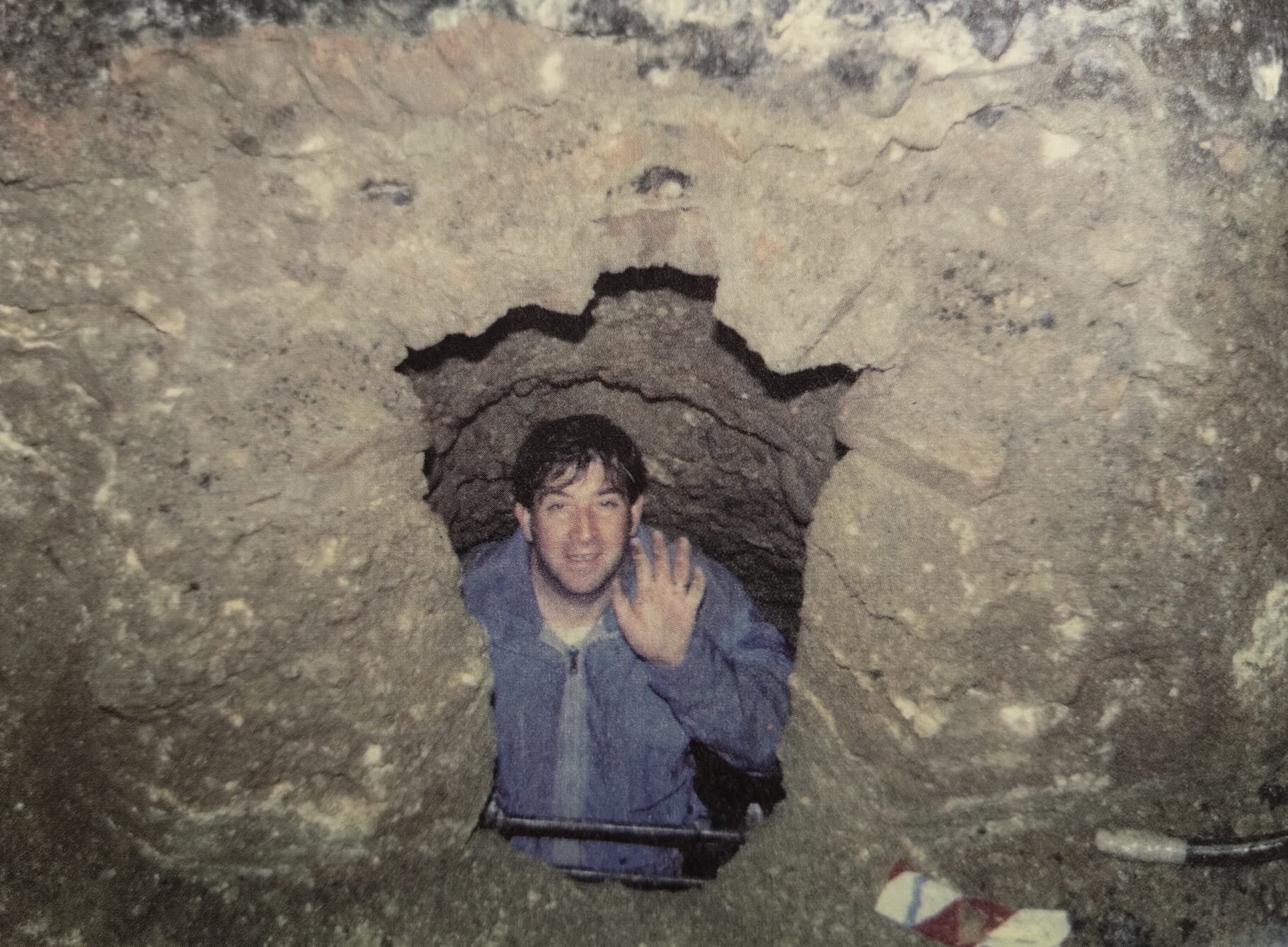
[In the photo: Sergio Serpi in one of the holes]
Early medieval Montalcinello is an integral part of the vast territorial heritage of Volterra, which became a diocese in the 5th century and was favored by numerous emperors. It was an enormous district, stretching from the borders of Populonia to those of Arezzo. Although Siena became a diocese in 700, it did not initially exercise control over Montalcinello, which was subjected to Volterra's power from the 7th to the mid-14th century. With the Lombard occupation at the beginning of the 6th century, Lombard-origin families such as the important Gherardeschi, Aldobrandeschi, Pannocchieschi, Ardengheschi, and Berardenghi families were favored; they were key figures in economic and political life as bishops (some even residing in Montalcinello as mentioned previously in thededicated article), landowners, entrepreneurs, and mining operators, constantly involved in disputes and negotiations.
Nevertheless, Montalcinello was never a feudal or noble residence, nor a center of jurisdictional or military power, even though it hosted the Mint in the 13th century. Its location, far from the main communication routes, kept it on the margins of the great flows of armies and pilgrims heading to Rome. Nevertheless, the village equipped itself with defensive walls, not to dominate but to protect itself from brigands, mercenary companies, and even wolves that populated the surrounding woods.
References
Source: Serpi E., “Montalcinello – History and Life of a Tuscan Village”, Siena, 1994.
Source: Serpi E., “Montalcinello: Origin and Events of a Community”, 1997.
Source: Serpi E., “The Statute of Montalcinello”, Siena, 2007.