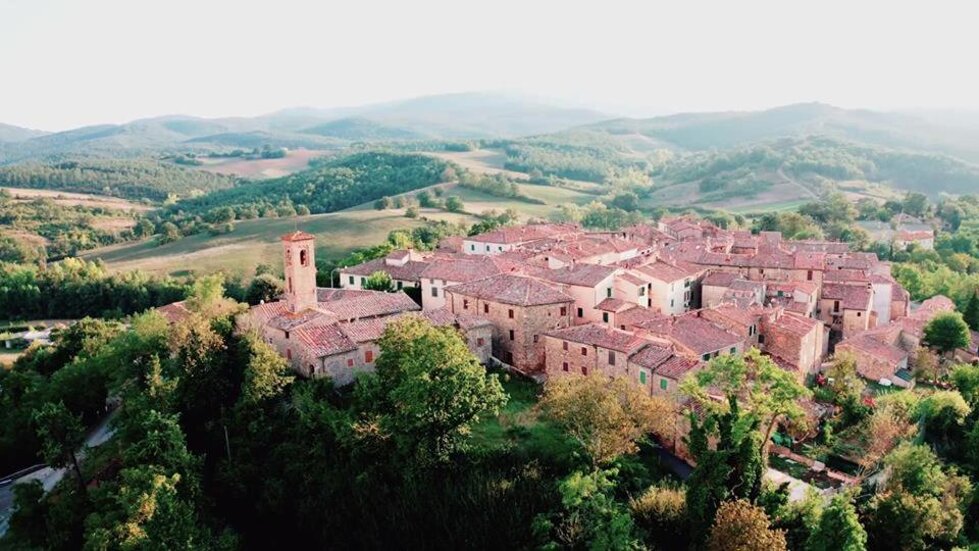
A few days ago Lorenzo wrote about the heat revolution in Montalcinello. In this regard, I would like to recall an image that has now disappeared from our collective imagination: the charcoal piles, which remind me of my homeland where the charcoal produced in the Cansiglio forest fueled the furnaces of the very important Murano glassworks.
The charcoal piles were stacks of wood arranged in a mound shape, with a central chimney and side holes to regulate the air. Here the wood burned slowly (something I only learned to do after a year... in my own fireplace!), turning into charcoal, a source of heat and a driving force for many activities, from cooking to metallurgy. This technique, widespread until the early 1900s in many areas of Italy, required patience, knowledge of the woods, and the skill of the charcoal makers, who were central figures in local economies. Not by chance, even the secret society of the Carbonari drew on the rituals of this ancient, tough trade.
In Montalcinello, the charcoal piles were not just work tools: they were precious assets to be protected! The Statute of Montalcinello of 1561, reporting rules dating back centuries earlier, insists on protecting the “communal charcoal pile”, declaring it inalienable: not even the Camerlengo, administrator of the assets, could dispose of it ("That the grass of charcoal piles and ditches cannot be sold"). Animals, large or small, were strictly kept away (“Penalty for large and small animals in the charcoal pile and ditches”), testifying to their importance in the social and productive fabric of the village.
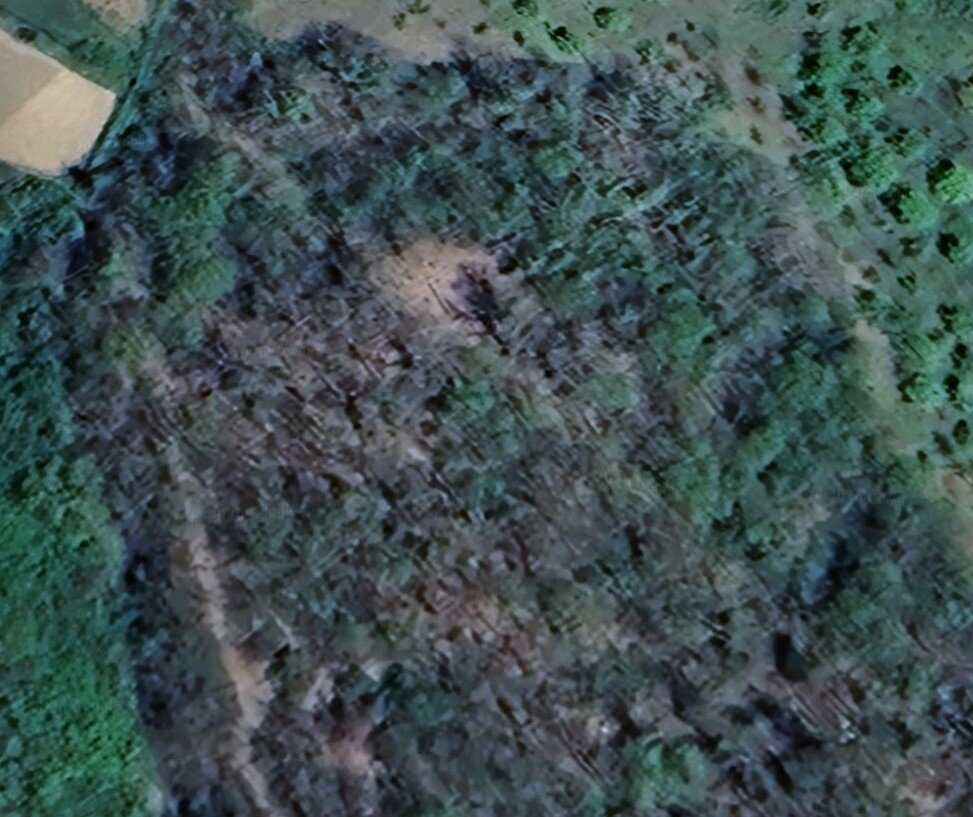
Intuitively, we think that charcoal was indispensable in the artisanal process of the Montalcinello furnace, since charcoal burns at high and constant temperatures, much more efficiently than regular wood, allowing for uniform and durable firing. In one article of the Statute, there is an explicit reference to the brick kiln (the general sale of which was prohibited, we believe precisely to establish a monopoly for said kiln), whose location has been passed down with satellite precision through the toponym “campo della fornace” (“kiln field”), where tractors have brought to light many pieces of fired material, such as gutters, tiles, and bricks. The Duke of Montalcinello, the historian Evaldo Serpi, reminds us that all the building material for the village was produced here.
Today the charcoal piles have disappeared from our woods, but they remain in the memory of the landscape and the community. Remembering them means recognizing the wisdom of our ancestors and the value of traditional practices, linked to work, the woods, and daily life in Montalcinello. We are Montalcinello.
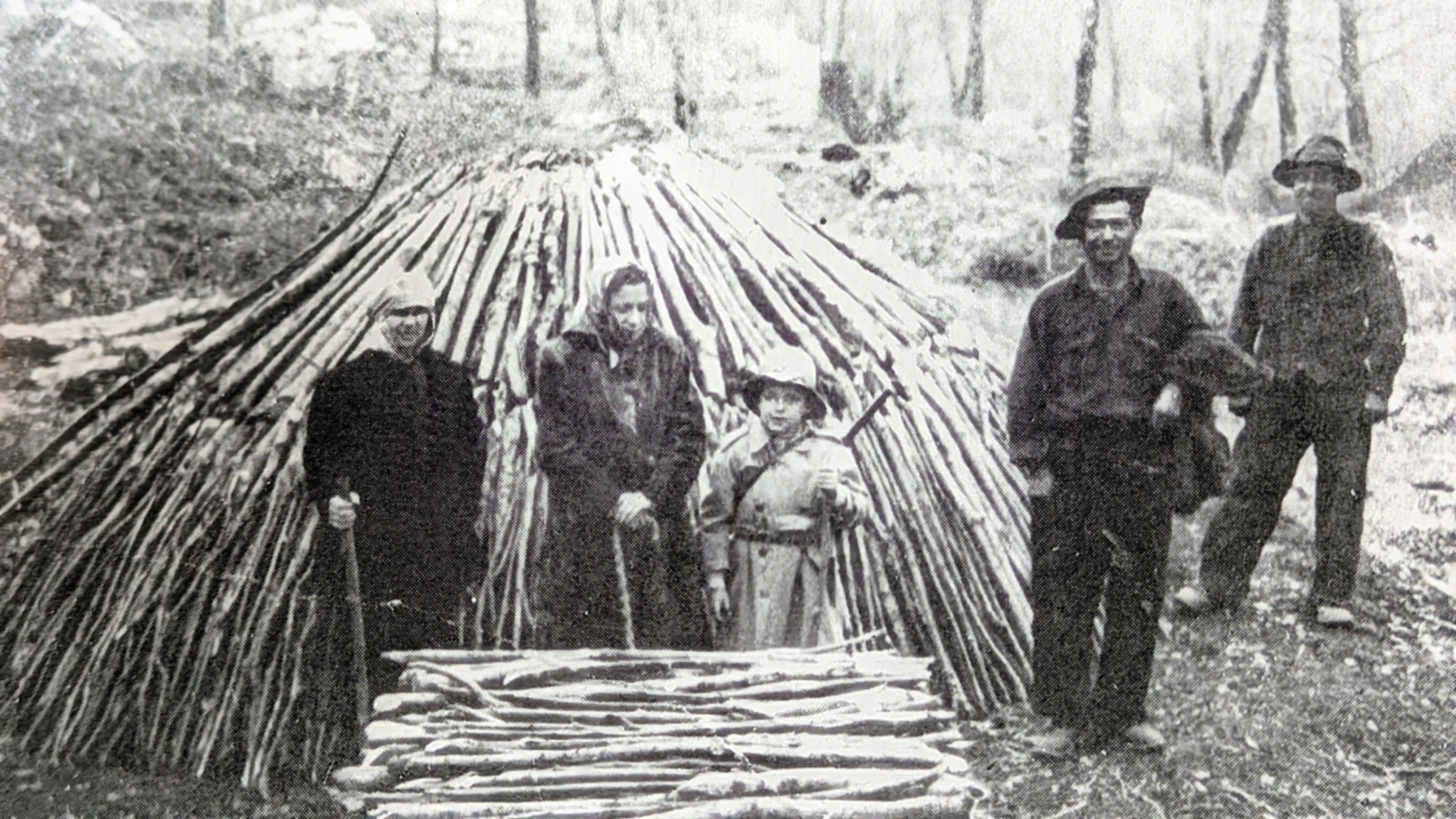
Image of a charcoal kiln in Montalcinello, taken from Serpi, E. (1997). Montalcinello: origin and events of a community. Siena: Cooperativa sociale Progetto Lavoro. In particular, we believe we recognize Virgilio Galgani and Fidalmino!