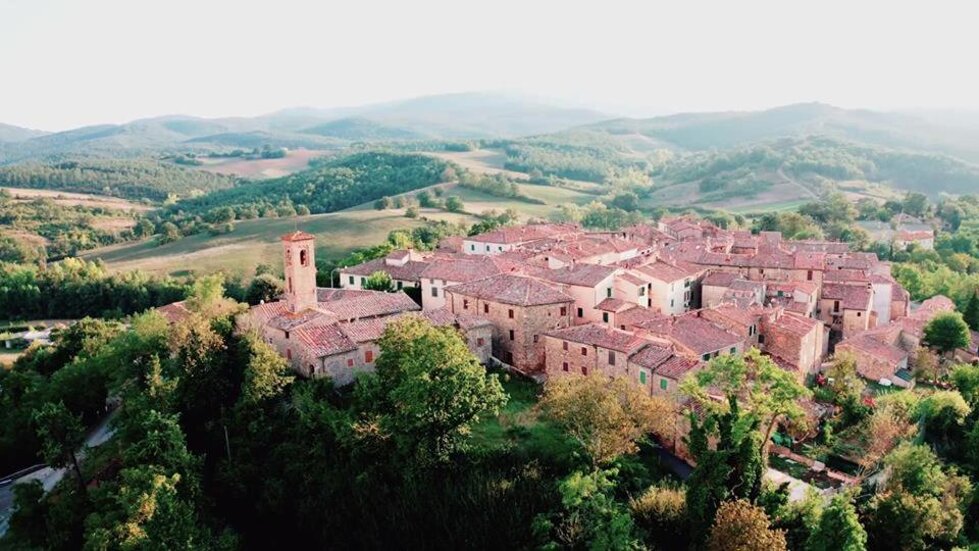
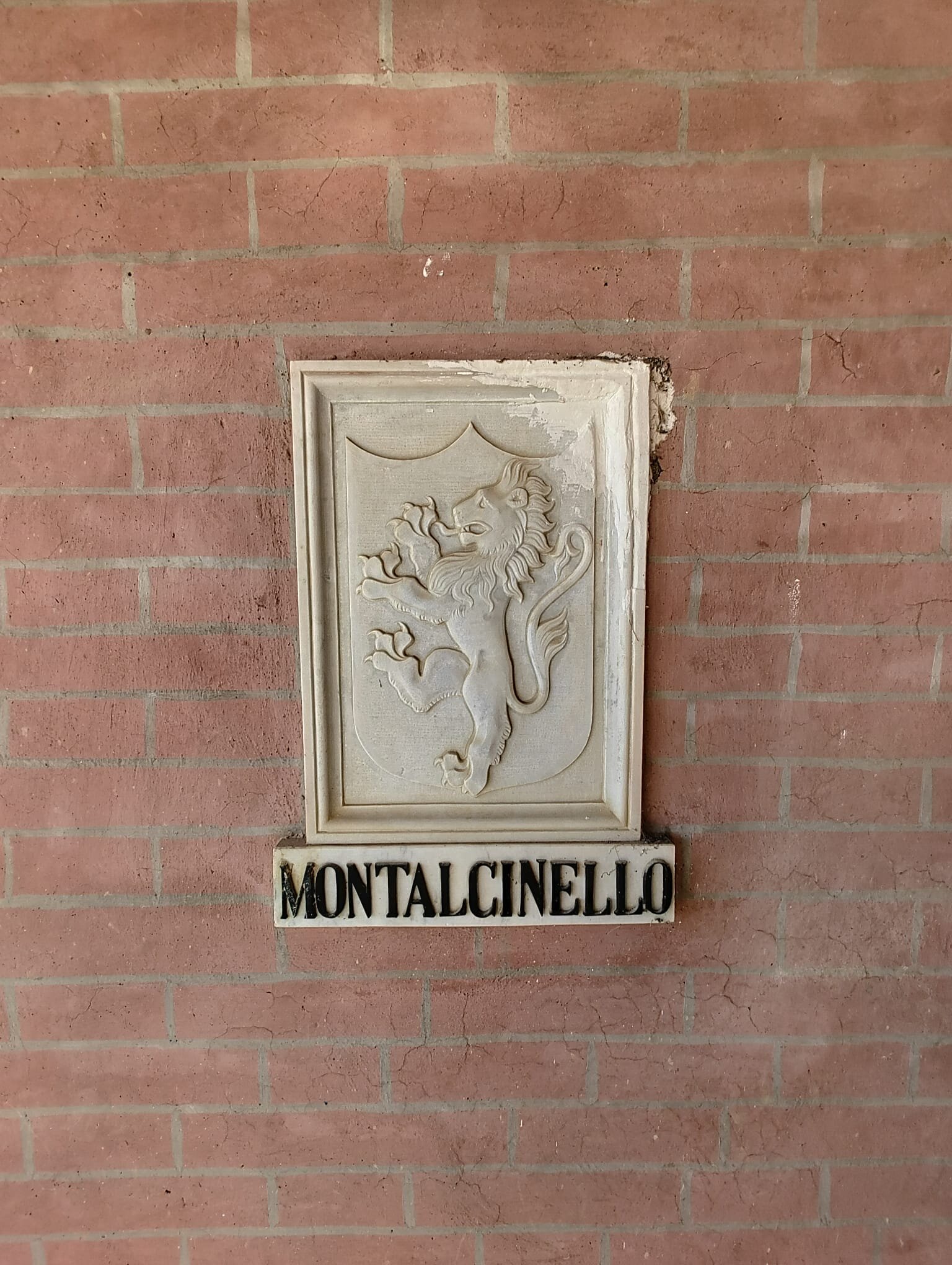
We consider indicative a turbulent phase of medieval history, which saw Montalcinello become nothing less than the residence of the Bishop of Volterra. It was back in 1231 when, considered a safe place because it was far from centers of power, our small village was chosen by the Bishop, who remained there until 1236, effectively making it a temporary episcopal residence—and forgive us if that seems insignificant to you.
We have already seen how in the same century Montalcinello became the seat of the Mint. The same reasons led the Church of Volterra to identify it as a safe refuge in a time of great instability.
Let’s take a step back to understand how this incredible roar of Montalcinello came about: the authoritarian rule of Bishop Galgano dei Pannocchieschi of Travale (founder of the counts of Elci), who led the diocese between 1150 and 1170 amid castle conquests and financial interests, had fueled growing discontent that culminated in his assassination. His successor Ugo, in office until 1185, tried to restore order and made Siena swear allegiance. He was followed by Ildebrando Pannocchieschi who, protected by Emperor Frederick I, started a dispute with Siena. The tensions led to an unfavorable agreement for Volterra in 1183, which was forced to pay an annual tribute and to give as collateral the castle of Frosini and the court of Montalcinello, conditions later annulled in 1186 by Emperor Henry VI. The situation worsened under the bishopric of Pagano dei Pannocchieschi, who inherited a diocese in serious economic difficulty. The conflicts with Siena intensified until the occupation of Montieri and Chiusdino and the imprisonment of Pagano himself, who gained his freedom by committing to restore the payment of the tax. In 1220, faced with an ever-deepening financial crisis, Pagano launched an excommunication against his creditors.
The breaking point was reached in 1231 when the clash between the bishop, the podestà, and the citizens of Volterra became open. Pagano was repeatedly threatened with death and, fearing he would suffer the same fate as Galgano (burned in his own house), decided to leave Volterra. He chose our Montalcinello, where he felt protected thanks to the proximity of his relatives, the counts of Travale, and powerful allies such as the Aldobrandeschi, owners of various castles in the area. During his stay in Montalcinello, Pagano was also able to directly control his properties (in Belforte, Casole, Montieri, and Berignone). This move provoked serious accusations against him, such as desertion, accusations to which he responded by claiming the right to reside anywhere in his diocese, as if it were a contemporary request for smart working.
Only at the end of 1236 did Pagano return to Volterra. He summoned the citizens to the cathedral and granted absolution for the previous excommunications, thus closing a turbulent phase of Volterra’s medieval history. Montalcinello once again remained in historical memory as a strategic refuge and a symbol of ecclesiastical power in search of security.
Source: Serpi E., “Montalcinello: origin and events of a community”, 1997